Glamping
Glamping in Japan: The Complete Guide for First-Timers
This article contains affiliate links. If you book through them, I may earn a small commission at no extra cost to you. Learn more
What is Glamping in Japan?
Glamping (glamorous camping) has exploded in popularity across Japan over the last few years. Unlike traditional camping, glamping lets you sleep in stylish tents, cabins, or domes — fully equipped with beds, electricity, and often gourmet BBQ meals.
Japan's glamping scene is unique: it blends the country's love of hospitality (omotenashi) with the beauty of its natural landscapes. You'll find resorts nestled in forests, by the ocean, near Mount Fuji, and along rivers.
I work at a glamping resort in Japan, so everything in this guide comes from firsthand experience — not a travel blog written from a laptop.
Best Regions for Glamping in Japan
Chiba (1 hour from Tokyo)
Chiba is one of the most accessible glamping destinations from Tokyo. The Boso Peninsula offers ocean views, forest settings, and mild weather. It's perfect for a weekend escape without a long drive.
Why Chiba?
Yamanashi (Mount Fuji area)
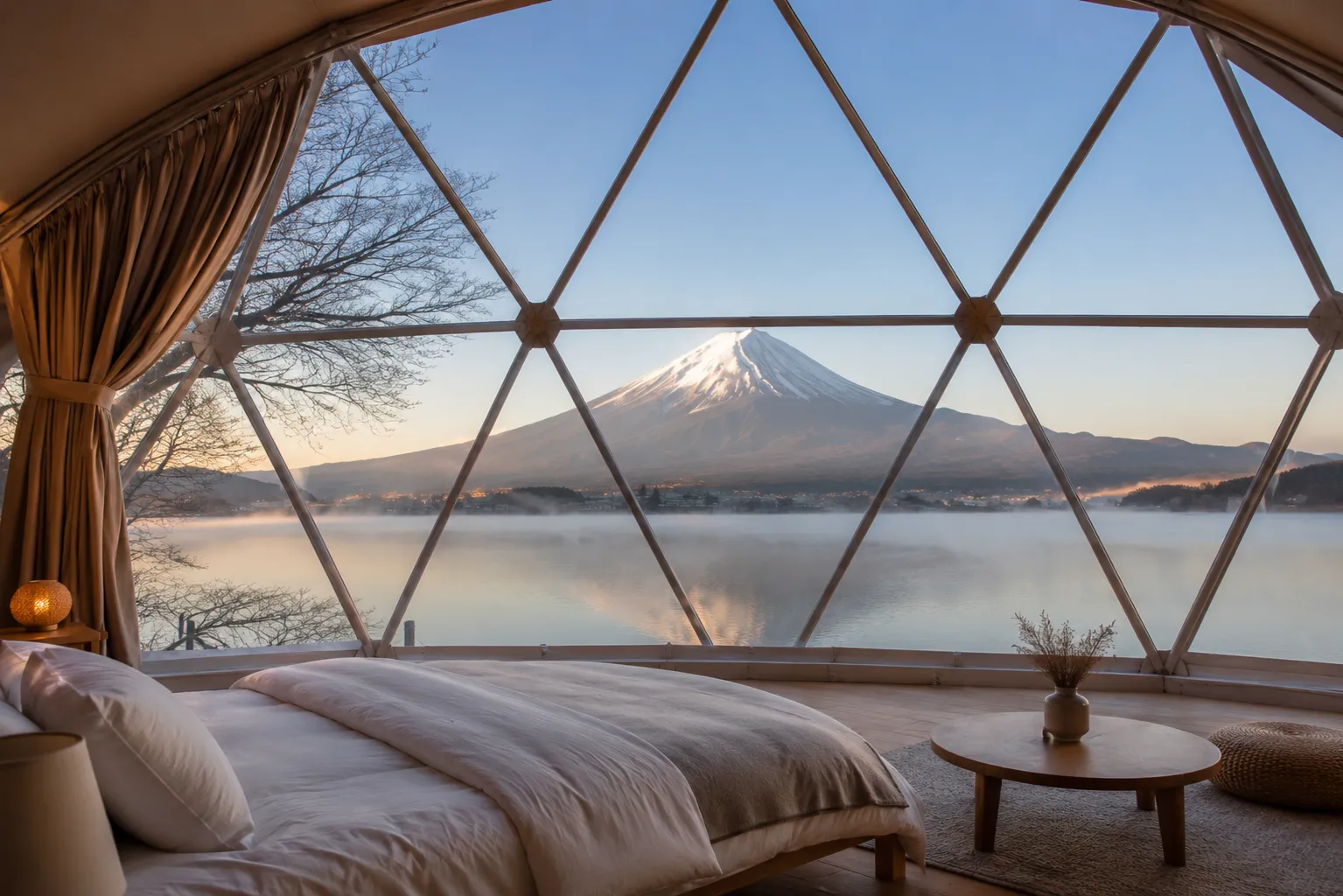
If you want a glamping experience with a view of Mount Fuji, Yamanashi is the place. Many resorts here offer dome tents with floor-to-ceiling windows facing the iconic mountain.
Why Yamanashi?
Ibaraki
Less crowded than Chiba and often overlooked by tourists, Ibaraki has some excellent glamping resorts surrounded by nature. Prices tend to be lower here too.
Why Ibaraki?
What to Expect at a Japanese Glamping Resort
Accommodation
Most Japanese glamping resorts offer:
Food
BBQ is the heart of Japanese glamping. Expect:
Activities
Depending on the resort and season:
How Much Does Glamping in Japan Cost?
Glamping in Japan typically costs ¥15,000–¥50,000 per person per night (roughly $100–$330 USD), including accommodation and BBQ dinner.
Higher-end resorts near Mount Fuji or with ocean views can cost more, but the experience is worth it. For a full breakdown by region, season, and named resort — plus what's actually included in that price — see my complete guide to glamping costs in Japan.
How to Book Glamping in Japan
The easiest way to book glamping experiences and activities in Japan as a foreign visitor is through GetYourGuide — English-language booking, international payment, and free cancellation on most tours.
For accommodation, Booking.com lists many glamping resorts across Japan with English support.
Before You Go
Three things worth reading before your first trip:
Tips for First-Timers
Final Thoughts
Glamping in Japan is one of the best ways to experience the country's nature without sacrificing comfort. Whether you're near Tokyo in Chiba, chasing Fuji views in Yamanashi, or exploring the quiet countryside of Ibaraki — there's a glamping experience that fits.
If you have questions about planning your trip, feel free to reach out. I'm happy to help.
Ready to explore Japan's outdoors?
Book your stay and your activities with English-language support, international payments, and flexible cancellation.