Glamping
Best Glamping Near Mount Fuji: A Local's Honest Guide
This article contains affiliate links. If you book through them, I may earn a small commission at no extra cost to you. Learn more
Why Glamp Near Mount Fuji?
Of all the places you can glamp in Japan, the Mount Fuji area is the one I recommend most to first-time visitors. There's a simple reason: you can lie in bed, open your eyes, and see Japan's most iconic mountain framed in your tent window. No crowds, no train platform, no fighting for a photo spot — just Fuji and your morning coffee.
I work at a glamping resort in Japan, and the Fuji-view sites are always the first to sell out. Once you've seen it in person, you understand why.
The region around Fuji (mainly Yamanashi, plus parts of Shizuoka) has the highest concentration of high-end glamping resorts in the country, and many were built specifically to face the mountain.
Where to Glamp: The Main Fuji Areas
Lake Kawaguchiko (Yamanashi)
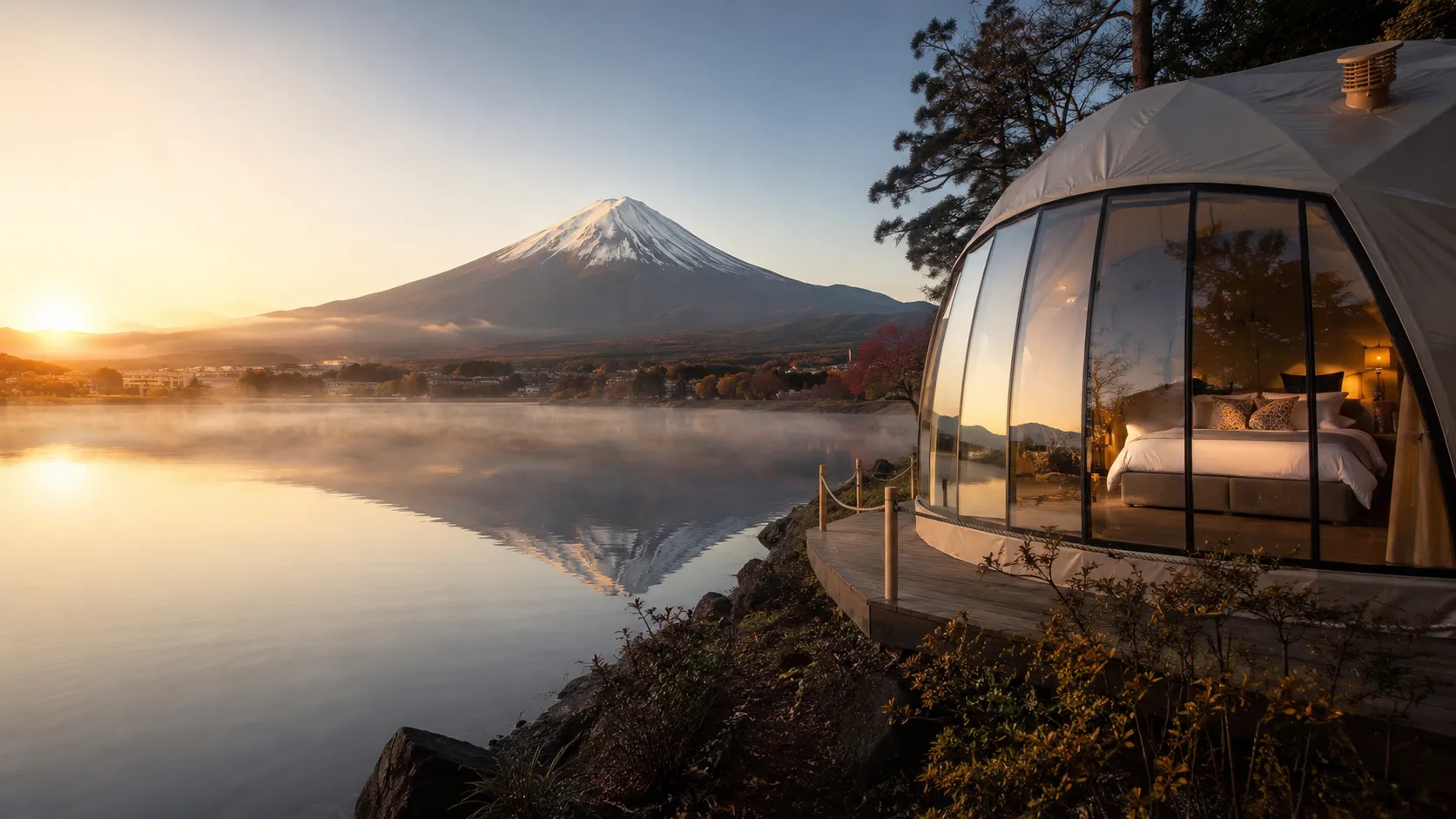
This is the classic choice. Kawaguchiko is one of the Fuji Five Lakes, and the north shore offers postcard-perfect reflections of Fuji on the water. Glamping resorts here often have dome tents with floor-to-ceiling windows aimed straight at the mountain.
Best for: First-timers who want the iconic Fuji view with cafes, shops, and easy access nearby.
Lake Yamanakako (Yamanashi)
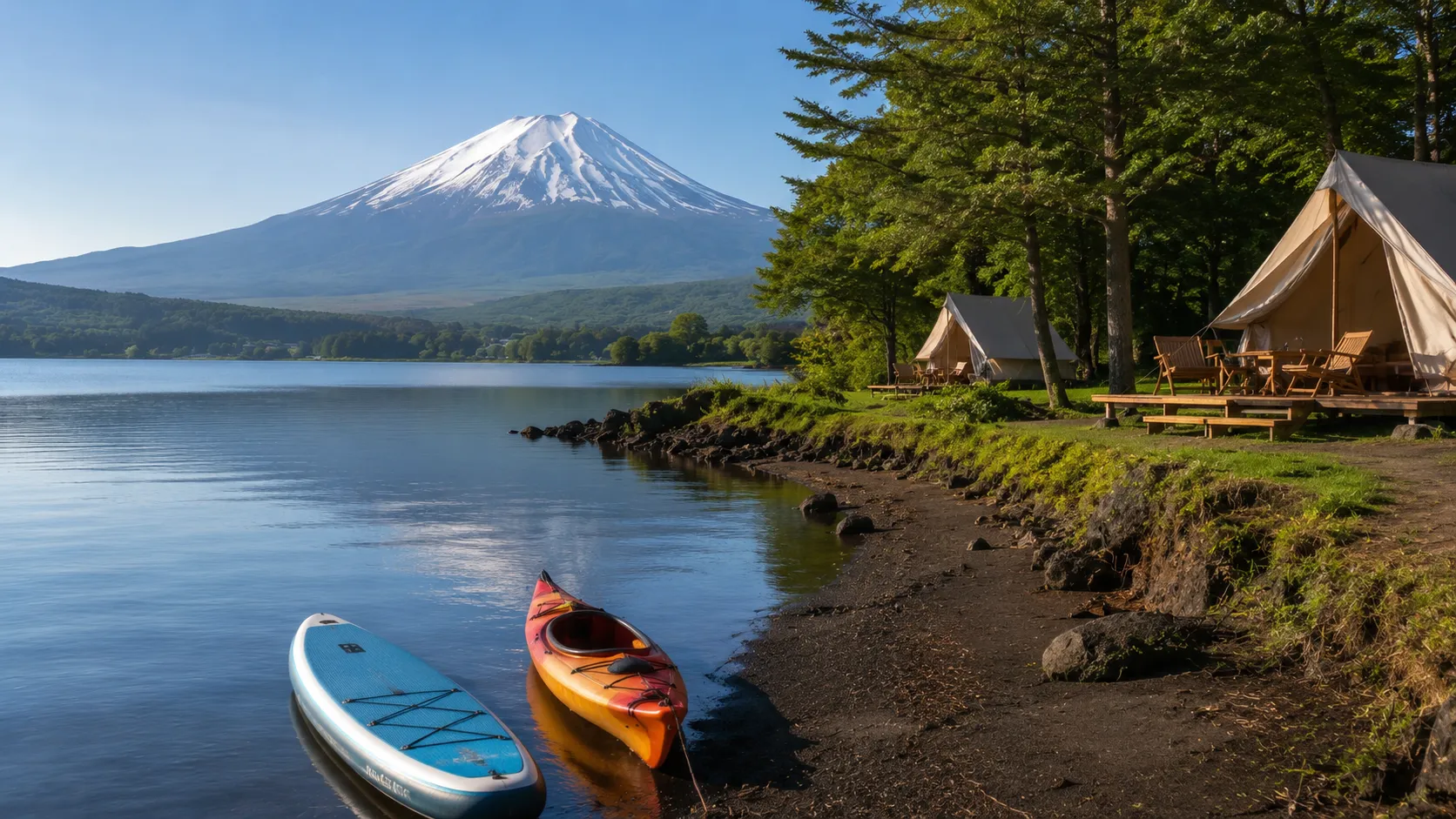
The largest of the Fuji Five Lakes and slightly higher in elevation, so summers stay cool. It's a little quieter than Kawaguchiko and popular with watersports fans.
Best for: Travelers who want Fuji views plus kayaking, SUP, and cooler summer nights.
Asagiri Highlands (Shizuoka side)
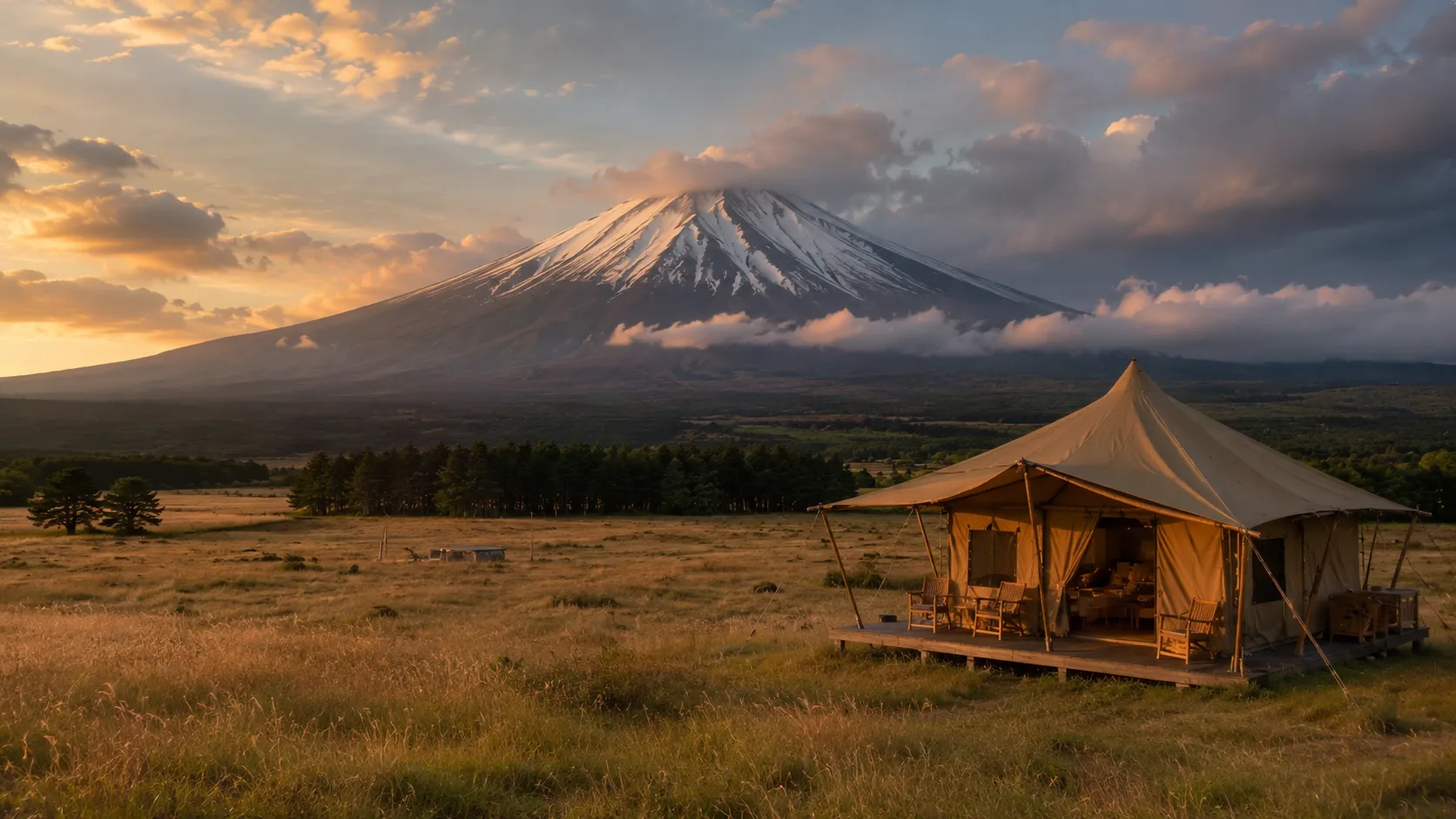
A wide-open highland plateau with unobstructed, dramatic views of Fuji rising from flat grassland. This is the spot for the most "epic" photos.
Best for: Photographers and couples who want the big, uninterrupted Fuji panorama.
What the View Is Actually Like (An Honest Note)
Here's the thing no booking site will tell you: Mount Fuji is shy. It's frequently hidden behind clouds, especially in summer afternoons and on humid days. Even at a "Fuji-view" resort, there's no guarantee you'll see it clearly.
Your best odds of a clear view:
If a clear Fuji view is the whole point of your trip, plan for two nights so you get two mornings to try your luck. Don't bet everything on a single evening.
How Much Does Fuji Glamping Cost?
Fuji-area glamping sits at the higher end of Japan's range, because the view commands a premium:
| Resort type | Price per person / night |
|---|---|
| Standard tent (lake area) | ¥18,000–¥28,000 (~$120–$185) |
| Dome with Fuji view | ¥25,000–¥45,000 (~$165–$300) |
| Luxury suite tent | ¥45,000–¥70,000+ (~$300–$470+) |
Prices usually include a BBQ dinner and breakfast. Weekends, holidays, and the autumn foliage season cost noticeably more — and sell out earliest.
For how Fuji pricing compares to the rest of Japan, and what's bundled into the nightly rate, see my full cost guide.
How to Get There from Tokyo
You don't necessarily need a car, though it helps.
By bus (easiest): Direct highway buses run from Shinjuku Station to Kawaguchiko in about 1 hour 45 minutes. This is the simplest option for car-free travelers.
By train: Take the JR line to Otsuki, then transfer to the Fujikyuko Line to Kawaguchiko (around 2–2.5 hours total).
By car: About 1.5–2 hours from central Tokyo. A car gives you the freedom to reach highland resorts (like Asagiri) that buses don't serve well, and to stock up at supermarkets.
Once you arrive, note that some resorts are a taxi ride from the nearest station — always check the resort's access info before booking.
What Else to Do Around Fuji
A Fuji glamping trip pairs perfectly with:
If you want to lock in guided activities or day tours in the Fuji area in advance, you can browse and book them through GetYourGuide — English-language booking with international payment and free cancellation on most tours.
Named Resorts in the Fuji Area
Rather than leaving you to search blind, here are the properties people actually book in this region, and what separates them:
| Resort | Area | Roughly per person | Known for |
|---|---|---|---|
| HOSHINOYA Fuji | Kawaguchiko | ¥50,000–80,000+ | Japan's original luxury glamping |
| Mount Fuji Panorama Glamping | Kawaguchiko (Funatsu) | ¥12,000–24,000+ for two | 180° view, 6 min walk from the station |
| Dot Glamping Fujiyama | Kawaguchiko (Oishi) | ¥25,000–45,000 | Dome windows aimed at Fuji |
| Private Villa Glamping Fuji Yamanakako | Yamanakako | ¥45,000–70,000 | Private onsen and pool per villa |
| PICA Fujiyama | Fujiyoshida | ¥18,000–35,000 | Activities, close to the 5th Station |
| Fujino Kirameki Fuji Gotemba | Gotemba (Shizuoka) | ¥25,000–45,000 | The southern face of Fuji |
Two of these deserve a specific note:
If you're travelling without a car, Mount Fuji Panorama Glamping is the outlier — it sits about six minutes' walk from Kawaguchiko Station, which almost nothing else with this view can claim. Everywhere else on this list needs a shuttle or a taxi from the station.
If you want the most refined version, HOSHINOYA Fuji is still the benchmark, with forest dining cooked over a wood fire and staff who handle everything.
I compare all of these in depth — including what a night at each is actually like — in my honest comparison of six Japanese glamping resorts.
Common Questions About Fuji Glamping
Can you really see Mount Fuji from the tent?
At the resorts built for it, yes — domes and cabins are positioned to face the mountain, often with a full window at the bed. But no property can guarantee the weather. Cloud hides Fuji frequently, especially on summer afternoons.
What month gives the best chance of seeing Fuji?
December to February. Dry winter air means the snow-capped peak is visible most mornings. Autumn (late October to November) is the next best, and adds foliage. Summer is the least reliable.
What time of day is best?
Early morning, in every season. Cloud builds through the day. Guests who sleep until eight are the ones who miss it.
How do I get to the Fuji Five Lakes without a car?
A direct highway bus from Shinjuku to Kawaguchiko takes about 1 hour 45 minutes for roughly ¥2,000–2,500, with no transfers. From there it's a resort shuttle (book ahead) or a short taxi. My car-free guide covers the details.
Is Kawaguchiko or Yamanakako better?
Kawaguchiko for a first trip — more to do, better transport, more resorts. Yamanakako for quiet, cooler summers, and better watersports. Yamanakako sits higher, so it's colder in winter.
How far ahead should I book?
Two to three months for autumn weekends and Golden Week. One to two months for regular weekends. Winter weekdays are often available within two weeks — and have the best views.
How does glamping compare to staying at a ryokan?
Both include dinner and breakfast and sit in a similar price range. A ryokan gives you tradition, tatami, and an onsen; glamping gives you nature, privacy, and a fire. I compare them properly in glamping vs ryokan.
What actually happens once I check in?
Check-in around 3pm, an unstructured afternoon, a bath before dinner, a BBQ you grill yourself from prepped ingredients, then a fire. Here's the full hour-by-hour breakdown.
Is one night enough?
If the view is the point, book two. One night gives you one morning, and one morning is a coin flip. Two nights roughly doubles your odds of a clear Fuji.
How to Book Fuji Glamping
For the accommodation itself, Booking.com lists many of the Fuji-area glamping resorts with English-language support and flexible cancellation. Search "glamping Kawaguchiko," "glamping Yamanakako," or "Fuji dome tent" for current availability and prices.
For activities and day tours, use GetYourGuide — it's the easiest option for foreign visitors.
My Honest Recommendation
If this is your first glamping trip in Japan and you want the unforgettable version, go to the Fuji area — specifically a dome resort on Lake Kawaguchiko or Yamanakako. Book two nights, aim for late autumn or winter if you can, and treat any clear-Fuji morning as the gift it is.
It's not the cheapest glamping in Japan. But waking up to that mountain is the kind of memory most travelers never get — and it's worth every yen.
Ready to explore Japan's outdoors?
Book your stay and your activities with English-language support, international payments, and flexible cancellation.