Planning
This article contains affiliate links. If you book through them, I may earn a small commission at no extra cost to you. Learn more
Most visitors to Japan spend all their time in cities. They follow the Tokyo–Kyoto–Osaka triangle, hit the major temples and food spots, and come home having seen almost no nature.
That's understandable. Japan's cities are extraordinary. But Japan's nature is just as good — and it's surprisingly close.
Within 1.5–2 hours of central Tokyo, you can be in forest, by the ocean, or at the foot of Mount Fuji. The challenge isn't distance. It's knowing how to plan it.
This guide walks you through the whole process, from choosing a destination to booking your activities.
Be honest about what kind of trip you actually want:
→ Yamanashi Prefecture (Fujikawaguchiko area)
→ Chiba Prefecture (Boso Peninsula)
→ Hakone (Kanagawa Prefecture)
→ Ibaraki Prefecture
Travelling Japan for a week or more? This guide covers a weekend from Tokyo. If you're on a longer trip taking in Kyoto and Osaka, see where to fit glamping into a Japan itinerary instead — the timing and rail pass maths are different.
For a nature weekend, you have three main options:
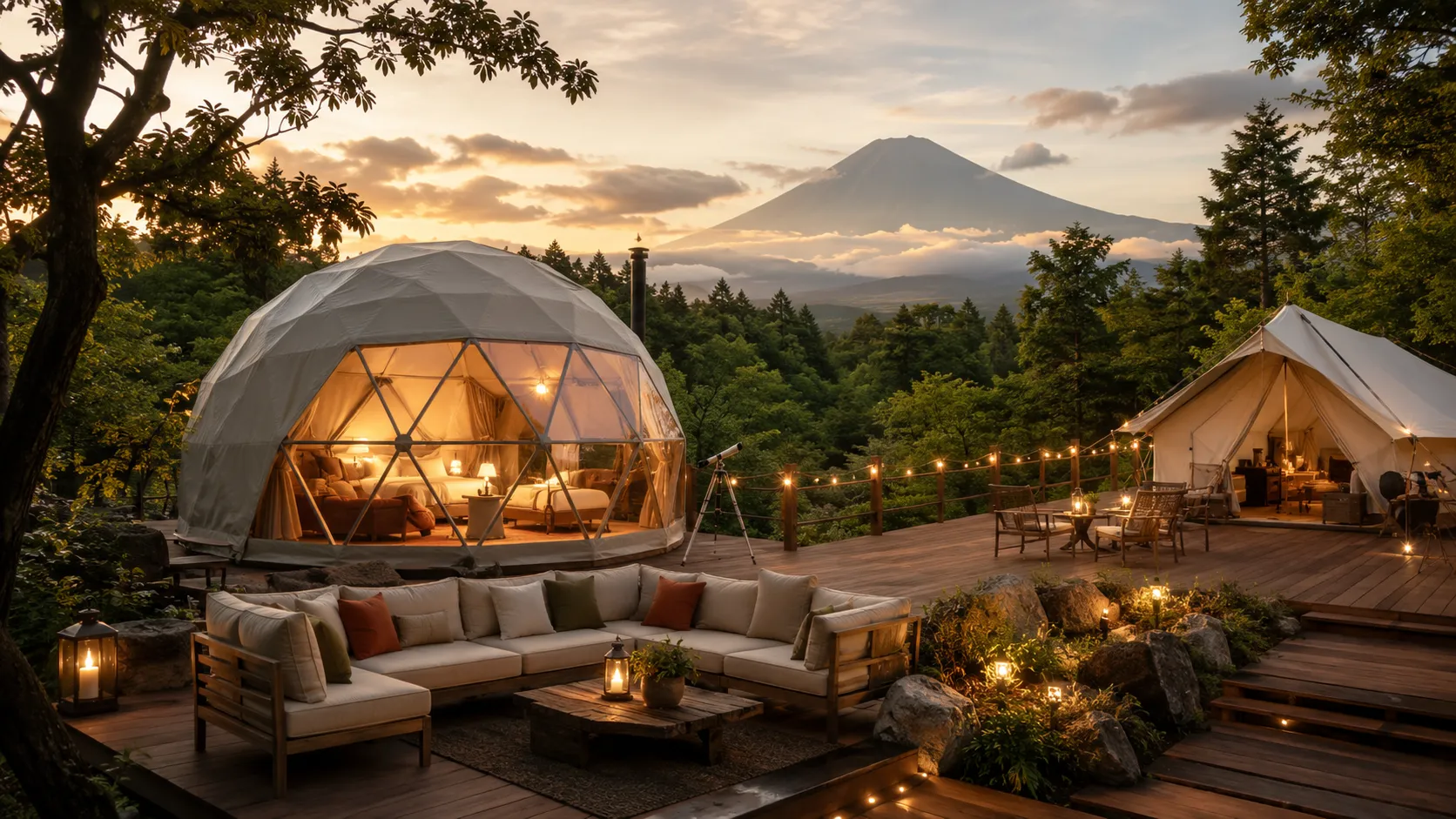
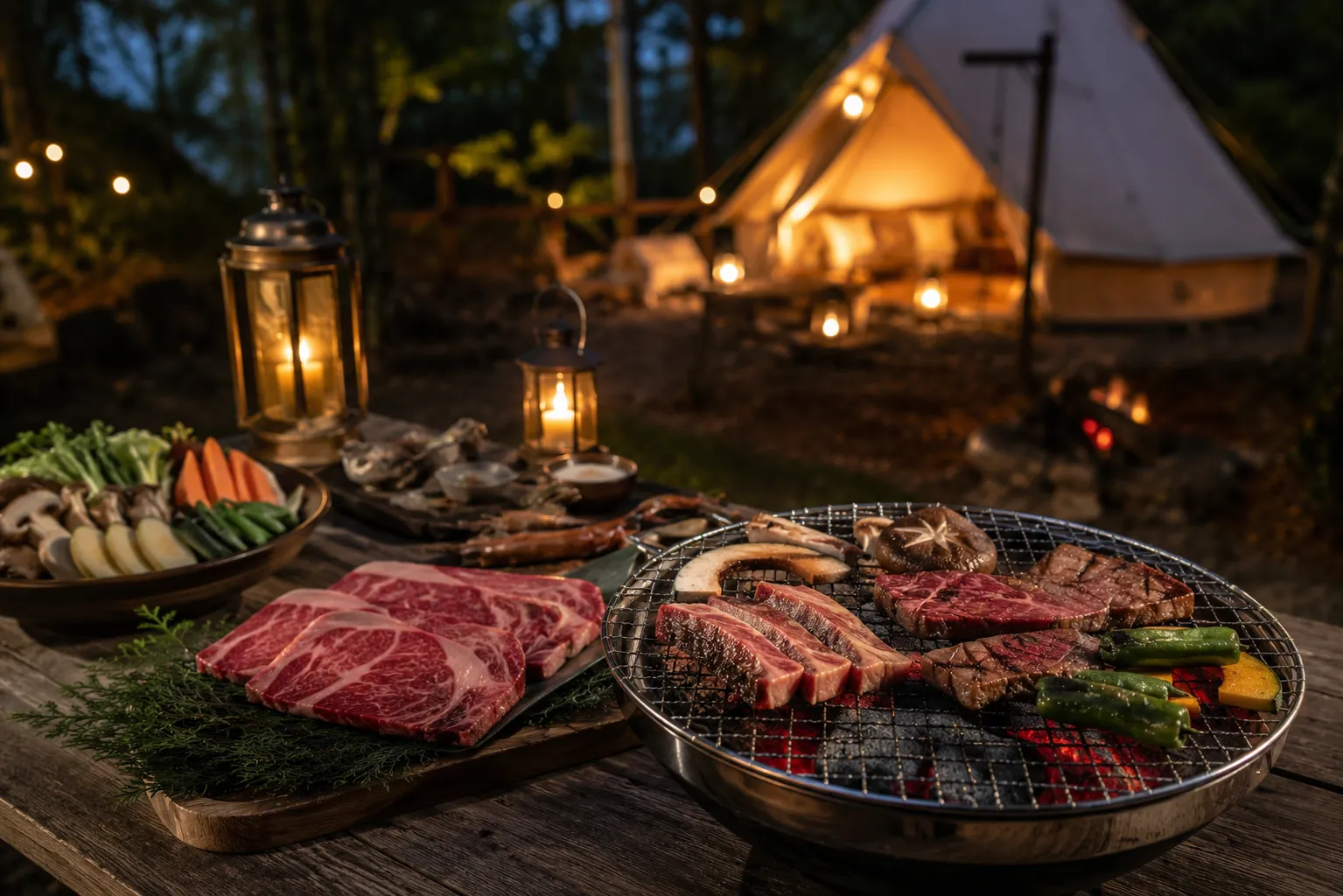
Everything is taken care of — accommodation, BBQ dinner, basic activities. You arrive, relax, and enjoy. Best for couples and those who don't want to plan too much.
How to book: Search Booking.com for "glamping [your chosen area]" — many resorts now list in English with flexible cancellation.
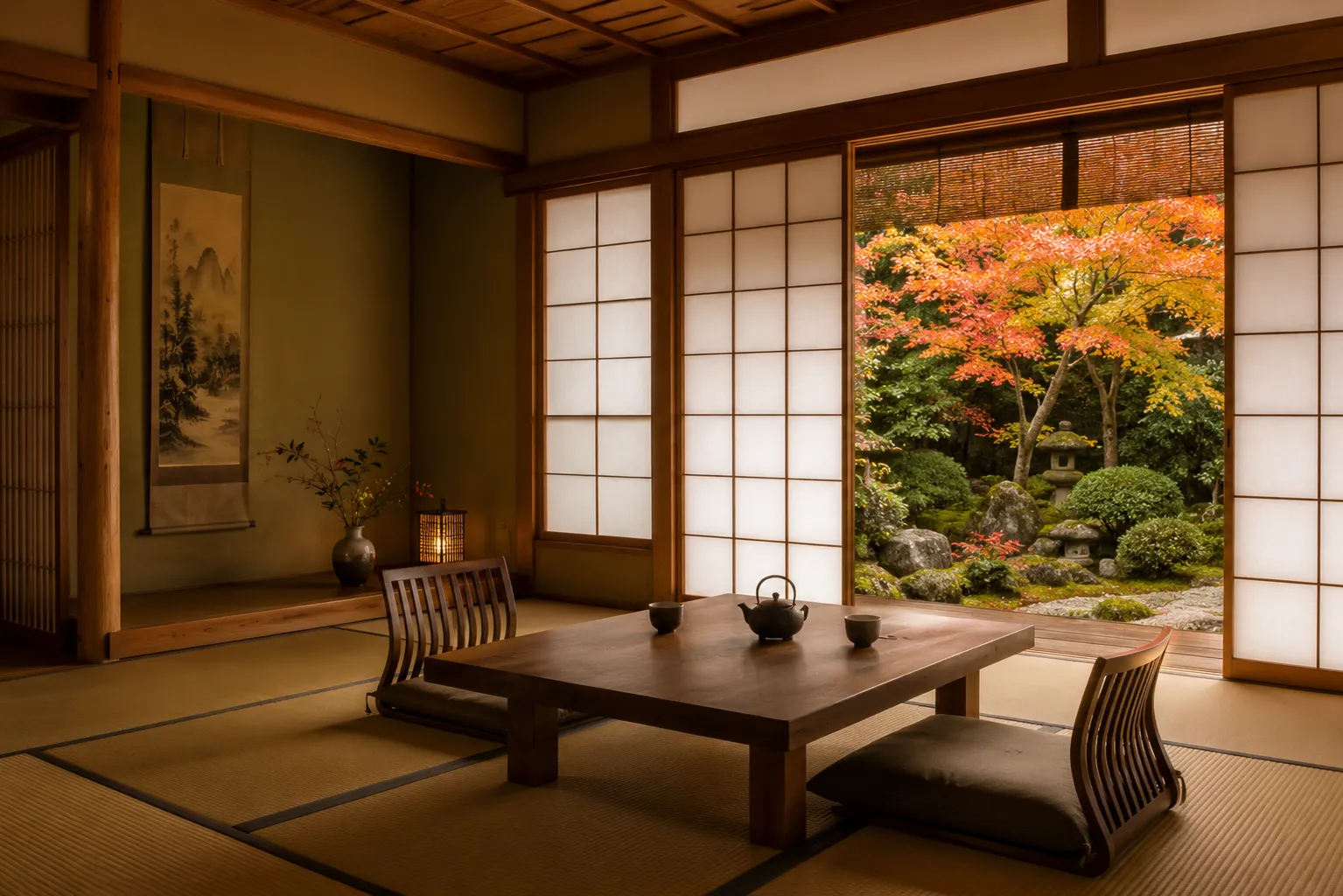
A ryokan offers tatami rooms, a multi-course kaiseki dinner, and access to communal hot springs. More traditional, less outdoorsy — but a genuine Japanese cultural experience.
Stay in a standard hotel near your chosen area and book outdoor activities separately. More flexibility, less atmosphere.
This is the most common mistake: people choose accommodation without thinking about what they'll actually do during the day.
Popular outdoor activities near Tokyo book up weeks in advance, especially on weekends. Book activities before you finalize your accommodation dates.
Best activities to book in advance:
How to book: Use GetYourGuide — English-language booking with international payment options, and many tours include pickup from your accommodation.
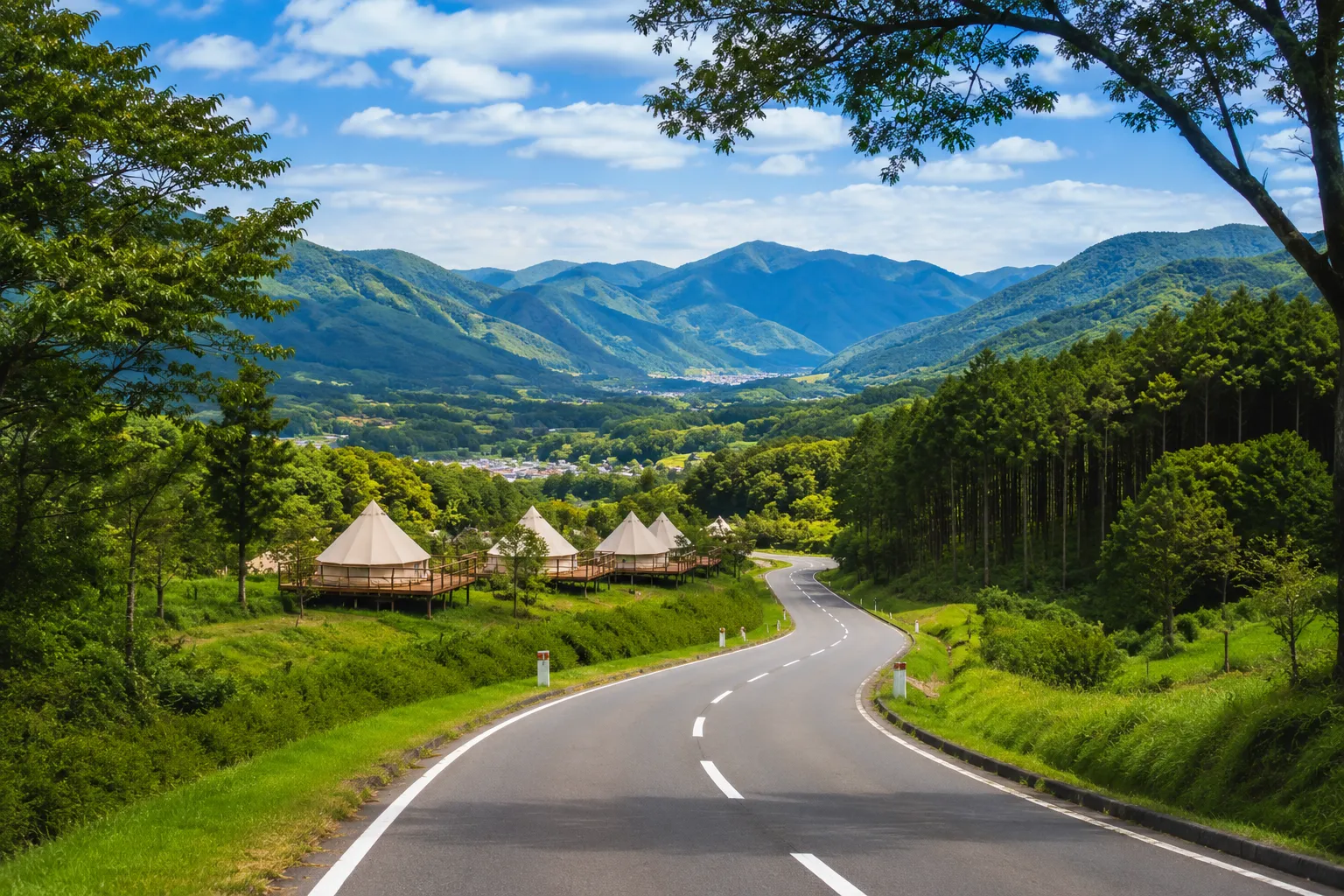
Renting a car from central Tokyo gives you the most freedom. Most outdoor resorts are designed for car visitors, with parking and easy road access.
Car rental tip: Book through international platforms (Rental Cars, Drive On Japan) for English-language support. International driving licenses are accepted in Japan.
Japan's train network is excellent, but remote glamping resorts often require a taxi or shuttle from the nearest station. Check with your resort before booking.
A quick packing list for a Japanese outdoor weekend:
| Time of Year | Conditions | Notes |
|---|---|---|
| March–May | Perfect. Cherry blossoms, mild weather | Book 4–6 weeks in advance |
| June–July | Rainy season. Some activities affected | Lower prices, fewer crowds |
| August | Peak season. Hot, crowded, expensive | Book 2–3 months ahead |
| September–November | Best overall. Autumn foliage | Book 3–4 weeks ahead |
| December–February | Cold but clear. Snow possible in Yamanashi | Good for Fuji views; fewer tourists |
It depends on what you want more. Chiba's Boso Peninsula is the shortest trip at 60–90 minutes and has coast and forest. The Fuji Five Lakes take about two hours and give you the mountain. Ibaraki is the quietest and cheapest but needs a car. My nature day trips guide compares the regions.
About an hour, genuinely. Northern Chiba via the Aqua-Line and parts of Okutama are inside 90 minutes. The common mistake is assuming you need to go far — people plan a three-hour trip to somewhere famous when an hour gets them somewhere just as green and far less crowded.
Yes, if you choose for it. Lake Kawaguchiko is the most reliable, with a direct highway bus from Shinjuku and resorts within walking distance of the station. Hakone and Okutama also work on trains. Ibaraki and inland Chiba effectively need a car. See my car-free guide.
Accommodation. Weekend availability is the real constraint — resorts book out four to eight weeks ahead, while most activities can be arranged a few days out. Lock the bed, then build the weekend around it.
One night is enough for a genuine reset if you leave Tokyo by late morning. Two nights makes sense when you're going somewhere over two hours away, or when you want a full day of activities rather than an afternoon.
Spring (March–May) and autumn (September–November) have the best all-round weather. Winter is underrated: cold, but the clearest Mount Fuji views of the year and far fewer people. Avoid Golden Week, Obon and New Year unless you book months ahead. My season guide goes month by month.
Roughly ¥20,000–¥40,000 per person for one night including accommodation, dinner and transport, if you're glamping. Less if you're staying somewhere without meals included. Travelling midweek or in low season brings the accommodation part down meaningfully — see my cost guide.
A well-planned weekend in Japan's nature is genuinely one of the best travel experiences available anywhere. The infrastructure is excellent, the food is incredible, and the natural scenery is far more dramatic than most people expect.
Enjoy it.
Book your stay and your activities with English-language support, international payments, and flexible cancellation.