Planning
This article contains affiliate links. If you book through them, I may earn a small commission at no extra cost to you. Learn more
When planning a trip to Japan, most travelers think about where to go. But how you stay can shape your trip just as much as the cities you visit.
Two of the most distinctly Japanese options are glamping (luxury outdoor camping) and the ryokan (a traditional Japanese inn). Both offer something you can't get from a regular hotel — but they're very different experiences.
I work at a glamping resort in Japan and have stayed at ryokan as a guest, so this guide compares them from both sides — including the things neither type of property puts on its own website.
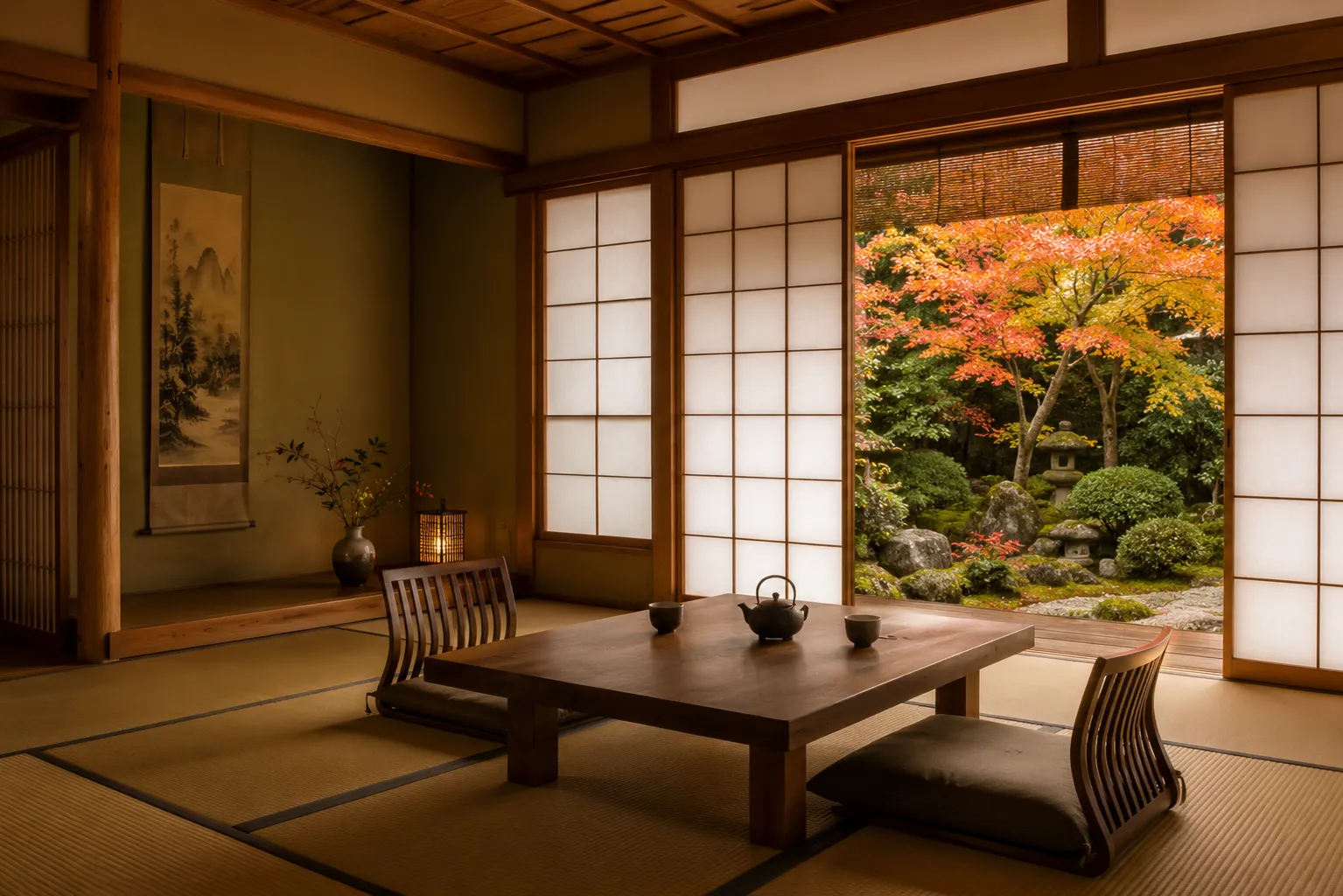
A ryokan is a traditional Japanese inn, many of which have been run by the same family for generations. The experience is built around Japanese hospitality (omotenashi) and usually includes:
A ryokan is about slowing down, soaking in hot water, and being quietly taken care of. It's deeply cultural.
What surprises first-timers: the schedule. A ryokan runs on fixed times — dinner at 18:00 or 18:30, breakfast at 07:30 or 08:00, baths closed for cleaning in the middle of the night, and check-in often not before 15:00 with a firm 10:00 checkout. Staff will enter your room to lay out the futon while you're at dinner. None of this is a problem, but it's the opposite of a hotel where you come and go as you please.
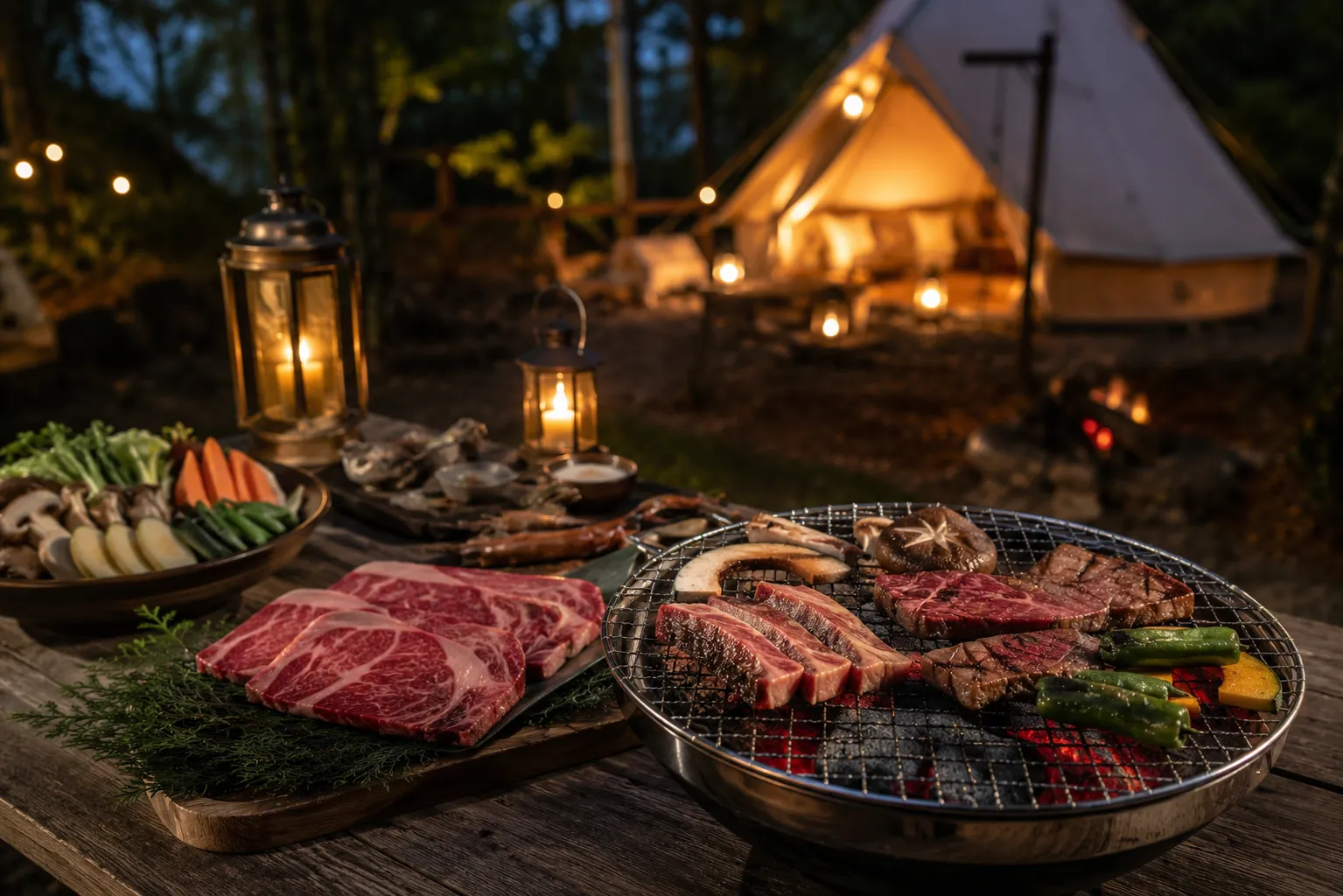
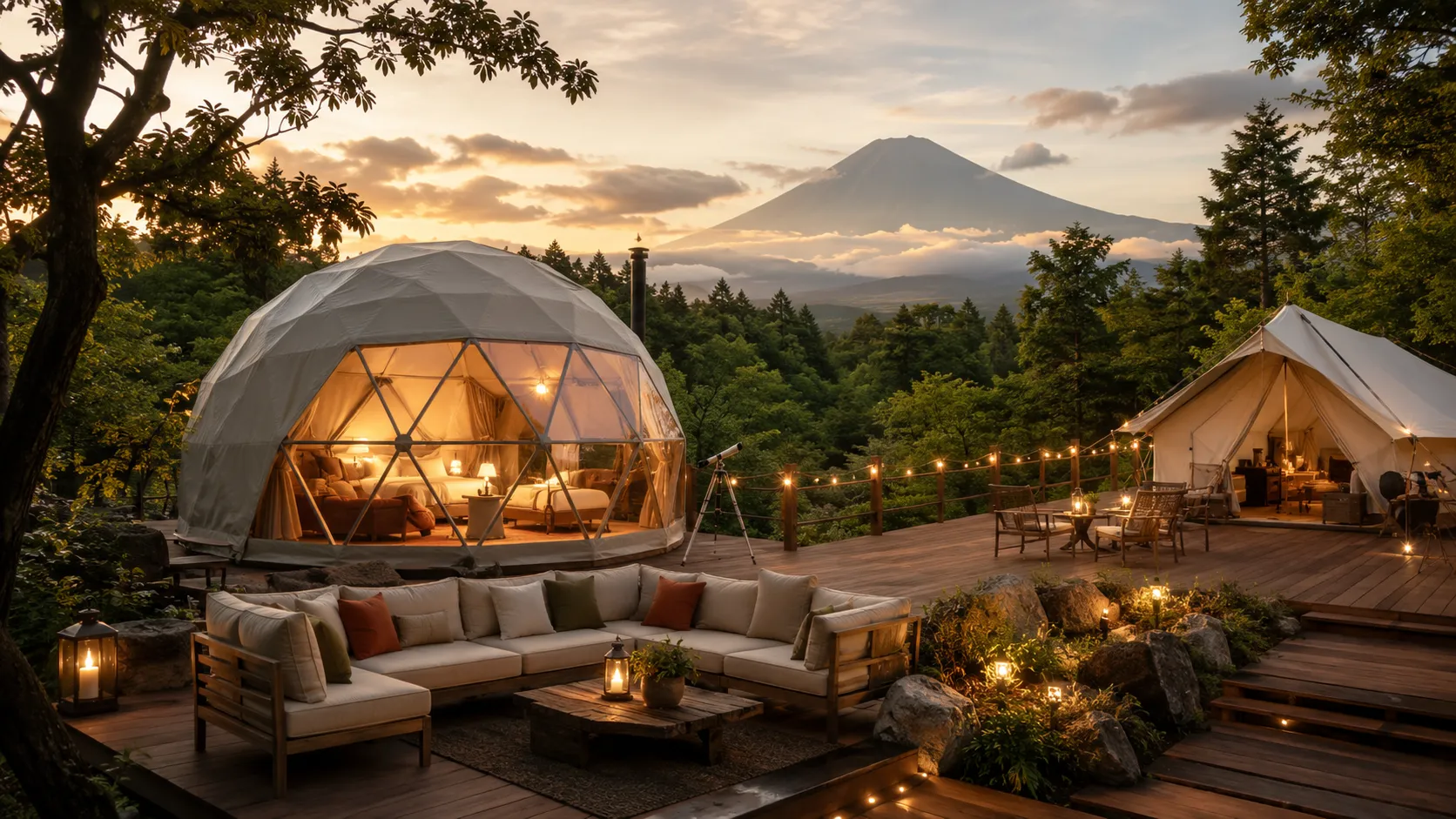
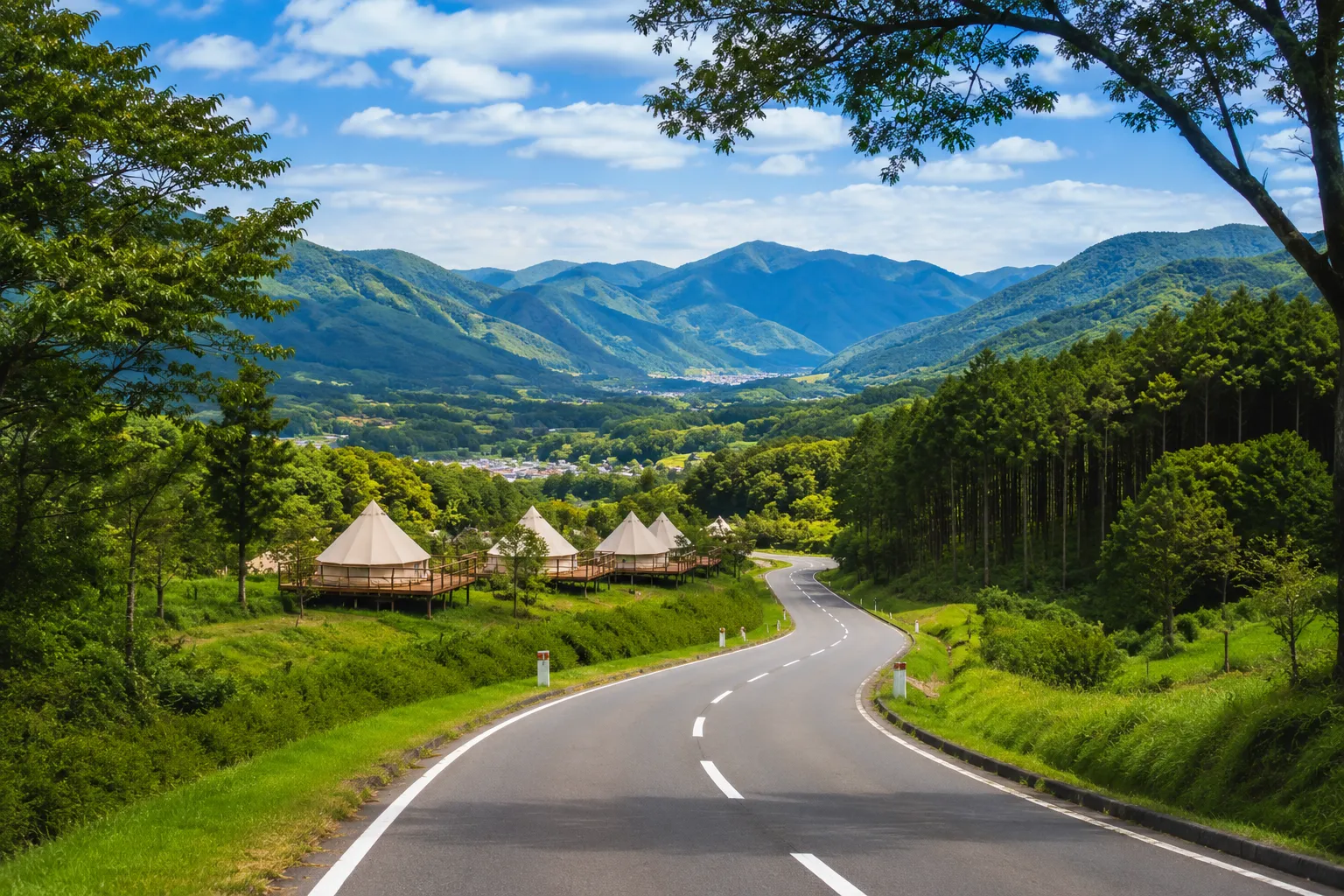
Glamping — "glamorous camping" — is a newer trend that has exploded across Japan in the last few years. You sleep in a stylish tent, dome, or cabin set in nature, with real beds and modern comforts. A typical glamping stay includes:
Glamping is about being in nature without giving up comfort. It's relaxed, social, and great for couples, families, and friends.
What surprises first-timers: how much of the evening is yours. Nobody schedules you. Dinner ingredients arrive at your site and you cook when you feel like it. The flip side is that you do cook — if you were hoping to be served, that's the ryokan experience, not this one.
| Feature | Ryokan | Glamping |
|---|---|---|
| Atmosphere | Traditional, calm, cultural | Modern, outdoorsy, relaxed |
| Bedding | Futon on tatami | Real beds in tents/domes |
| Dinner | Kaiseki (multi-course), served | BBQ (you cook), ingredients provided |
| Dinner timing | Fixed, usually 18:00–18:30 | Whenever you like |
| Setting | Town or hot-spring village | Forest, lakeside, mountains |
| Bath | Onsen hot springs | Private sauna or bath at newer sites |
| Noise at night | Very quiet, thin walls | Nature sounds, neighbours audible outdoors |
| Best for | Culture, relaxation, couples | Nature, families, groups |
| Price / night | ¥20,000–¥60,000+ per person | ¥15,000–¥50,000 per person |
| Language support | Varies; smaller inns limited | Often more English-friendly |
| Tattoo policy | Public baths often restrict | Rarely an issue |
Tattoos. Many ryokan with public onsen still refuse entry to guests with visible tattoos, or ask you to cover them. If you have tattoos and want a ryokan, book one with a kashikiri (private, reservable) bath or an in-room bath. Glamping resorts almost never have this restriction, and private saunas at newer sites sidestep the issue entirely.
Dietary requirements. Kaiseki is built around seasonal seafood and dashi (fish stock). Vegetarian, vegan or halal kaiseki exists but has to be arranged well in advance, and small family-run inns may simply not be able to do it. Glamping BBQ is far easier to adapt — you're choosing from meat, seafood and vegetable sets, and swapping is routine.
Floor sleeping. A futon on tatami is firmer and lower than most Western visitors expect. If you have back or knee problems, or struggle to get up from floor level, ask specifically for a washitsu with beds room, or choose glamping, where beds are standard.
Here's a tip many travelers miss: you don't have to choose.
A popular itinerary combines the two:
Many glamping resorts in Yamanashi and Chiba are near traditional onsen towns, so you can easily do a ryokan night and a glamping night back-to-back. You get the best of both worlds — tradition and the outdoors.
A route that works: Tokyo → ryokan in Hakone (onsen, kaiseki) → glamping near Lake Kawaguchiko or Gotemba (Fuji views, BBQ) → back to Tokyo. Hakone and the Fuji Five Lakes are connected by bus, so this needs no car and no backtracking. My itinerary guide covers which day of a Japan trip to spend this way.
Order matters. Do the ryokan first and the glamping second. A ryokan is restful and formal; glamping is active and loose. In that order the trip winds up rather than down, and you're not trying to sit still through kaiseki the night after a day of kayaking.
Both options sit in a similar price range (roughly ¥15,000–¥60,000 per person per night), and both typically include dinner and breakfast — so you're not just paying for a bed. My glamping cost guide breaks the glamping side down by region, season, and named resort if you want to budget precisely.
Compared to a high-end city hotel that charges similar rates for a room without meals or a view, both glamping and ryokan stays offer strong value for what you get.
One practical note on how the money is quoted: both are priced per person, not per room. A listing showing ¥30,000 means ¥60,000 for two people. This catches out visitors used to Western hotel pricing, and it's the single most common booking surprise for both property types.
Slightly, at the lower end. Entry-level glamping in Ibaraki or inland Chiba starts around ¥15,000 per person with dinner, while a ryokan with kaiseki and onsen rarely goes below ¥20,000. At the top end they converge — a luxury Fuji-view dome and a high-end ryokan both run ¥50,000+ per person.
Easily, and it's the best use of two nights. Hakone (ryokan) and the Fuji Five Lakes (glamping) are connected by bus, so you can do one night each with no car. Do the ryokan first.
A ryokan, if you only have one night to spare. Tatami, kaiseki and onsen are things you genuinely cannot experience outside Japan. Glamping is wonderful but exists worldwide — what makes the Japanese version distinct is the wagyu, the service, and the setting, not the format itself. If you do have a second night and want to see what the glamping side involves end to end, start with the complete guide.
Glamping, clearly. Kids can be loud, run around, and eat when they're hungry. A ryokan's two-hour seated kaiseki dinner and paper-thin walls make it hard work with under-10s. Some ryokan do set minimum ages. See my glamping with kids guide.
Glamping resorts listed on international booking sites will handle English. Ryokan vary enormously — large onsen-town inns are fine, while tiny family-run places may have none. Book a ryokan through an English-language platform and the key details will have been settled in writing before you arrive.
Yes, but far fewer have it than you'd hope, and the ones that do charge heavily for a Fuji-facing room. Glamping has the advantage here: dome tents are built with floor-to-ceiling windows specifically for the view, so you get it from bed rather than from a window across the room. See my Mount Fuji glamping guide.
For a ryokan, almost nothing — yukata, towels, toiletries and slippers are provided. For glamping, also very little, but bring layers and closed shoes since you'll be outdoors in the evening. My packing guide has the full list.
For accommodation (both glamping resorts and ryokan), Booking.com lists many options across Japan with English-language support. Search "glamping Yamanashi," "glamping Chiba," or "ryokan onsen" for current availability.
For glamping activities and tours, the easiest option for foreign visitors is GetYourGuide — English-language booking, international payment, and free cancellation on most tours.
For getting between them, 12Go handles buses and trains across Japan in English, which is useful for the Hakone–Fuji leg where the connection is a highway bus rather than a train.
There's no wrong answer here. A ryokan gives you tradition, hot springs, and quiet refinement. Glamping gives you nature, comfort, and a more relaxed, social vibe.
If you only have one night to spare, pick the one that matches the trip you want — and if it's your first time in Japan, lean ryokan. If you can spare two, do both, ryokan first. Either way, you'll come home with a story most travelers to Japan never get.
Book your stay and your activities with English-language support, international payments, and flexible cancellation.