Activities
This article contains affiliate links. If you book through them, I may earn a small commission at no extra cost to you. Learn more
Most travelers come to Japan for the food, the temples, the trains. But some of the most memorable moments happen outside the city — in the forests, rivers, and mountains that cover nearly 70% of the country.
Japan's outdoor experience is different from what you'll find in Europe or North America. It's not just about scenery. It's about doing something — learning a skill, connecting with nature in a way that's deeply rooted in Japanese culture.
Here are seven experiences that our guests consistently say were the highlight of their entire Japan trip.
This one surprises people every time.
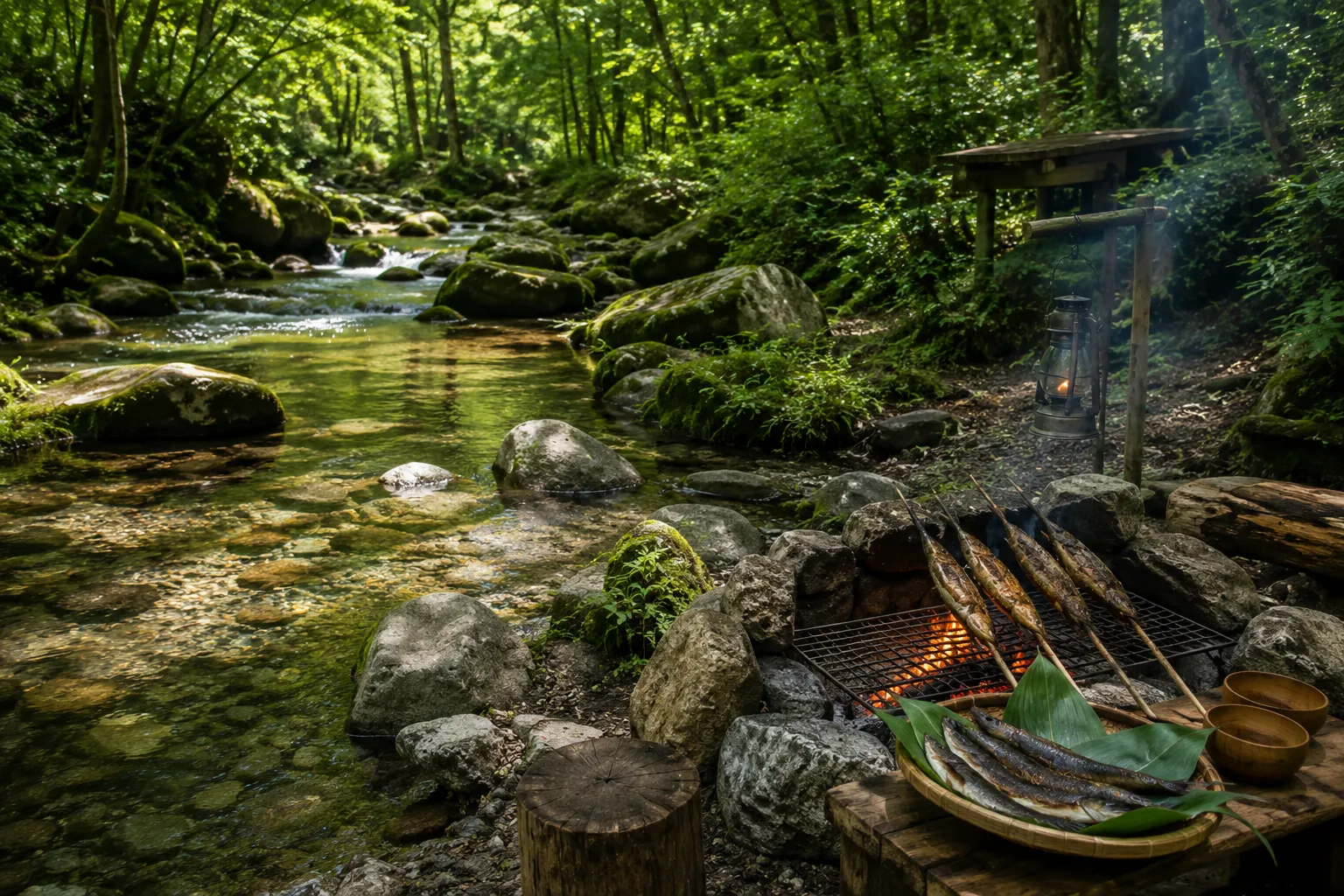
At certain outdoor resorts in the Yatsugatake (八ヶ岳) area of Yamanashi, you can participate in a traditional Japanese activity called sakana no tsukamidori — literally "fish grabbing." You wade into a shallow stream, catch trout with your bare hands, then learn to clean and cook it yourself over an open fire.
A guest from Taiwan described it perfectly after doing it with her family: "We never do this at home. We buy fish from a supermarket, already cut. Here, we learned where food actually comes from. My kids understood something important today."
That's not a tourism experience. That's food education (shokuiku, 食育) — something Japanese schools take seriously, and something you can experience as a visitor.
Why it works for travelers: It's hands-on, photogenic, and completely unlike anything available back home. Kids love it. Couples love it. And the fish you cook and eat at the end tastes incredible.
Where to find it: Outdoor activity resorts in the Yamanashi / Yatsugatake area, particularly around the Kiyosato highlands.
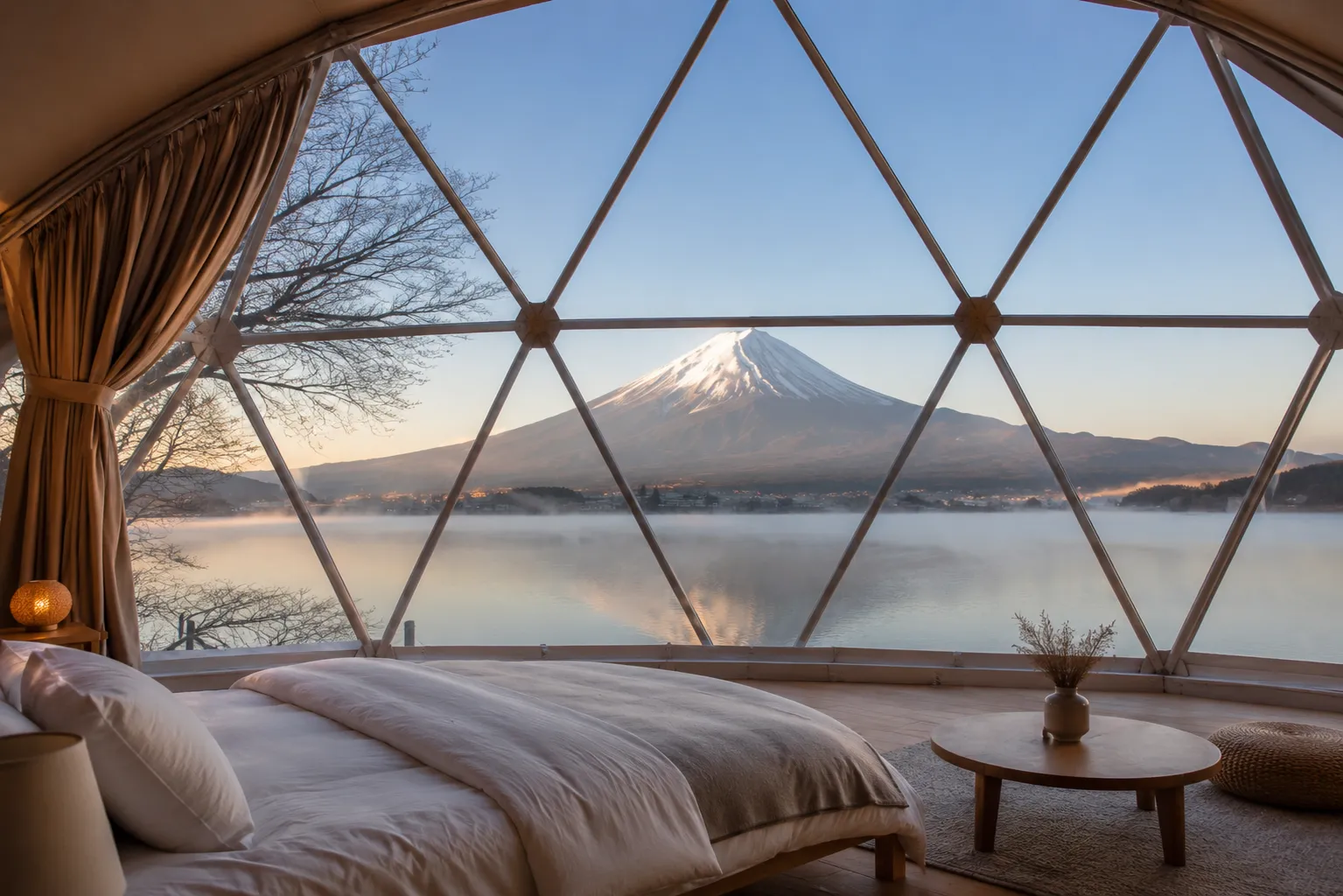
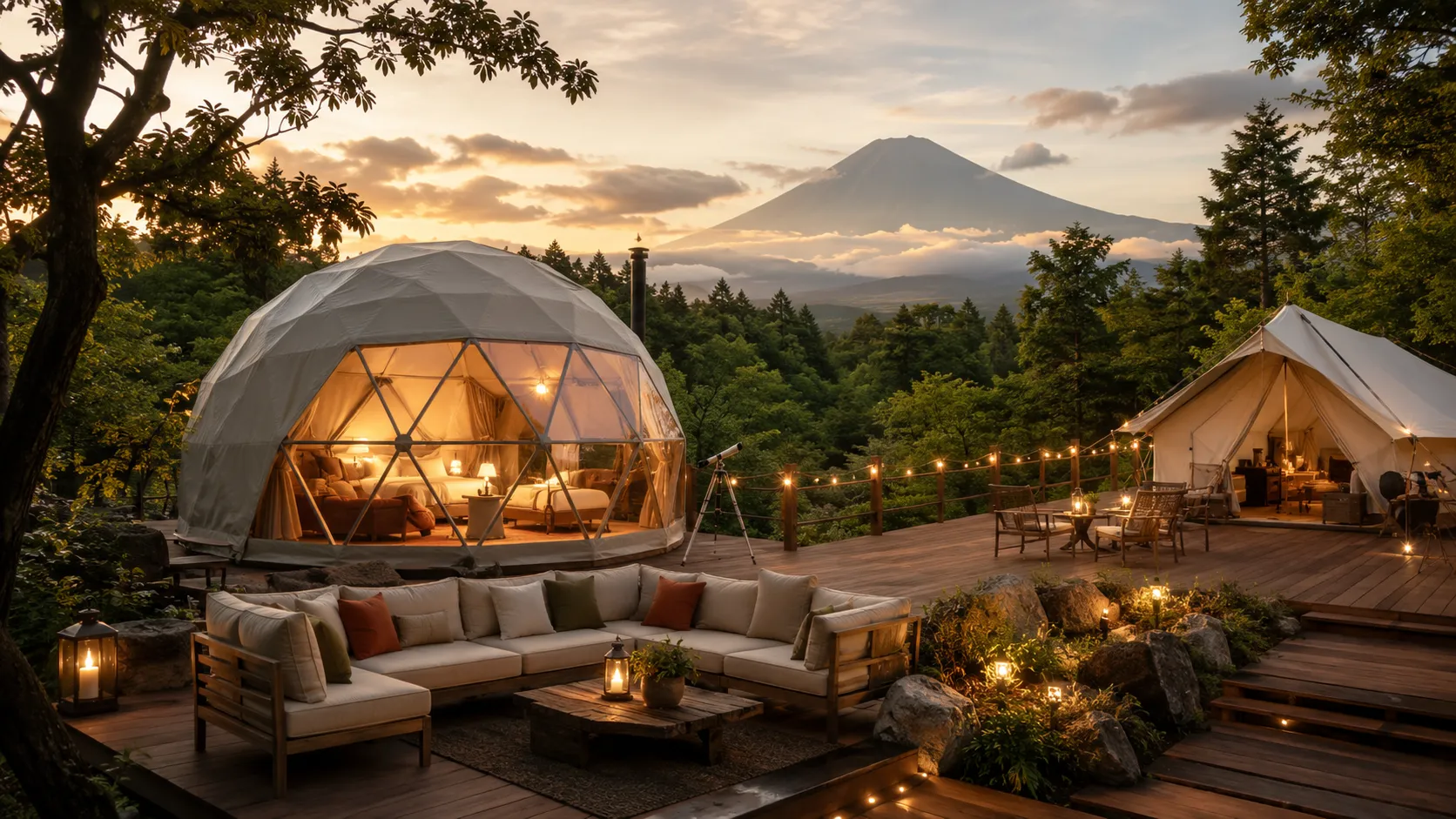
Glamping in Japan has reached a remarkable level of quality — but nothing beats waking up inside a transparent dome tent with Mount Fuji filling the window.
Several resorts in the Yamanashi / Fujikawaguchiko area offer dome-style accommodation with floor-to-ceiling panoramic views of the mountain. You get a real bed, heating, and often in-tent dining — with that view.
Best time: October to February, when Fuji is capped with snow and the air is clearest.
Japan invented shinrin-yoku — "forest bathing" — in the 1980s as a recognized form of stress reduction. It's not hiking. It's slow, deliberate time in the forest: noticing smells, sounds, the texture of bark.
Many glamping resorts offer guided shinrin-yoku walks with certified guides. The Boso Peninsula in Chiba and the forests around Nikko are especially well-regarded for this.
Why it resonates: In a world of screens and schedules, 90 minutes of silent forest time feels almost radical. Guests consistently report it as "unexpectedly emotional."
Japan's inland lakes — particularly in the Fuji Five Lakes region (Yamanashi) and around Nikko (Tochigi) — are often completely flat in the early morning. Stand-up paddleboarding here feels like floating on a mirror, with mountains reflected beneath you.
Many resorts include SUP sessions in their activity packages, or you can book through local operators.
Best time: May–October, early morning for the best conditions.
Japanese BBQ (yakiniku style) is a different experience from Western-style grilling. You're seated around a personal charcoal grill, cooking small pieces of premium wagyu beef, fresh seafood, and seasonal vegetables in your own time.
At glamping resorts, this happens outdoors — at your private fire pit, under a canopy of stars, with no crowds and no menu rush. It's one of those meals where time slows down.
What to order: Wagyu beef sets, fresh oysters (if in season), and local vegetables. Many resorts source directly from nearby farms.
Traditional Japanese archery (kyudo) is a meditative practice — but many outdoor resorts offer a more accessible Western-style archery experience that's immediately satisfying. Standing in a forest clearing, pulling back a bow, hitting a target 20 meters away. It's simple and completely absorbing.
No experience required. Most sessions run 30–60 minutes with a guide.
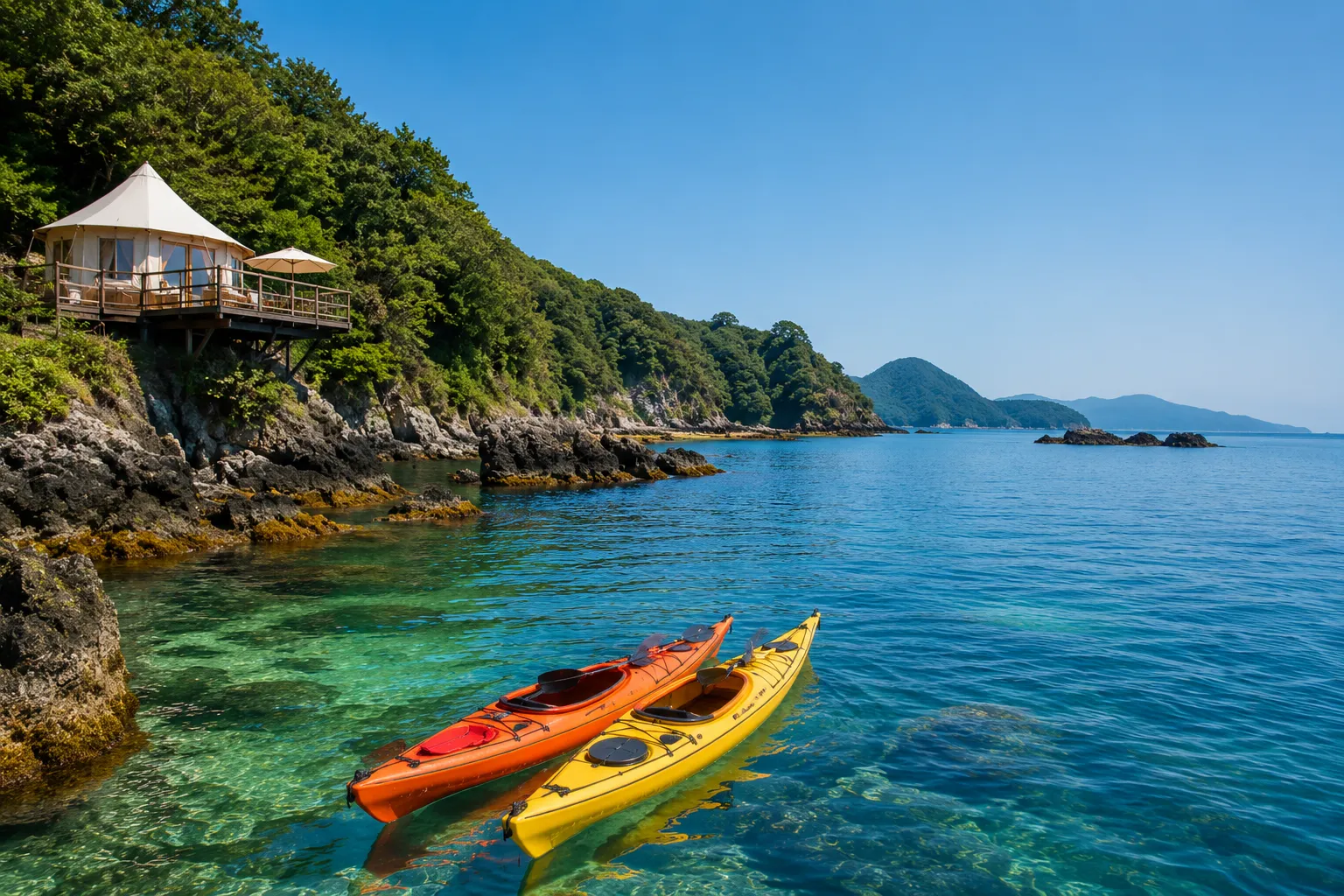
The Boso Peninsula in Chiba and the Izu Peninsula in Shizuoka both have rugged coastlines with sea caves accessible only by water. Guided kayaking tours take you through rock formations, into caves, and along cliffs you'd never see from land.
The guides are usually excellent English speakers, and the experience is suitable for beginners.
Best time: April–October.
Worth adding since it has taken over the glamping scene in the last two years.
Japan has its own sauna culture built around ととのう (totonou) — the clear-headed calm you reach after cycling through heat, cold water and rest in open air. It isn't about enduring the heat; it's about the contrast.
What makes the glamping version different from a city bathhouse is the third step. You rest outdoors, in forest air, often beside a fire. Newer resorts across Chiba and Yamanashi now build around a private barrel or tent sauna rather than a communal bath — which also solves the thing that puts many visitors off Japanese bathing.
Best time: Winter, when the contrast between 85°C and near-freezing air is at its sharpest.
Full detail in my guide to sauna glamping in Japan, and if it's the bath rather than the sauna you care about, what "private bath" actually means.
Not at operators set up for international visitors. Guided activities booked through English-language platforms come with English-speaking guides, and at glamping resorts listed internationally at least one staff member on shift handles English. Rural one-man operations are a different matter — book through a platform if language worries you.
More than you'd think, because several happen at the same place. A single glamping night can include the fish catching, the BBQ, the sauna and the Fuji view. The kayaking and forest bathing are usually separate bookings nearby. My itinerary guide covers fitting a night into a wider trip.
Usually the fish catching. Guests arrive expecting a novelty and leave having gutted and grilled something they caught themselves — it's hands-on in a way few organised activities are, and children remember it for years.
It's a formal practice in Japan — shinrin-yoku was coined by the Forestry Agency in the 1980s and has been studied since. Whether you treat it as a wellness practice or simply a slow walk among trees, the forests it happens in are genuinely beautiful.
Autumn (October–November) for the widest range — comfortable for walking, kayaking and sitting outdoors. Winter for the sauna and the clearest Mount Fuji views. Summer for water activities, though it's hot and humid at low elevation. See the season guide.
2–4 weeks for most activities, longer for weekends and holidays. Glamping resorts need more: two to three months for autumn weekends and Golden Week.
Most of these activities can be booked in advance through GetYourGuide — English-language booking, international payments, and free cancellation on most tours.
For accommodation where several of these happen in one place, Booking.com lists Japanese glamping resorts in English. Search "glamping Chiba" or "glamping Kawaguchiko."
For the fish-catching experience and dome glamping, booking 2–4 weeks in advance is recommended, especially on weekends.
None of these require you to be an outdoors person. That's the point — Japan has built its outdoor culture around comfort, hospitality and detail, so the barrier to entry is low and the experiences land anyway.
If you only do one: catch your own fish at a glamping resort, then eat it by a fire. It's the one guests describe first when they get home.
Book your stay and your activities with English-language support, international payments, and flexible cancellation.