Planning
This article contains affiliate links. If you book through them, I may earn a small commission at no extra cost to you. Learn more
Here's the mistake I see most often: guests arrive with a car full of camping gear they never touch, and without the one small thing they actually needed.
Japanese glamping is not camping. The resort supplies almost everything — often including things Western travelers don't expect, like a yukata (cotton robe) waiting on the bed. But there are a handful of items that nobody provides, and a few that Japan will quietly demand of you.
I work at a glamping resort in Japan, so this list comes from watching hundreds of check-ins.
Skip these. Your resort has them.
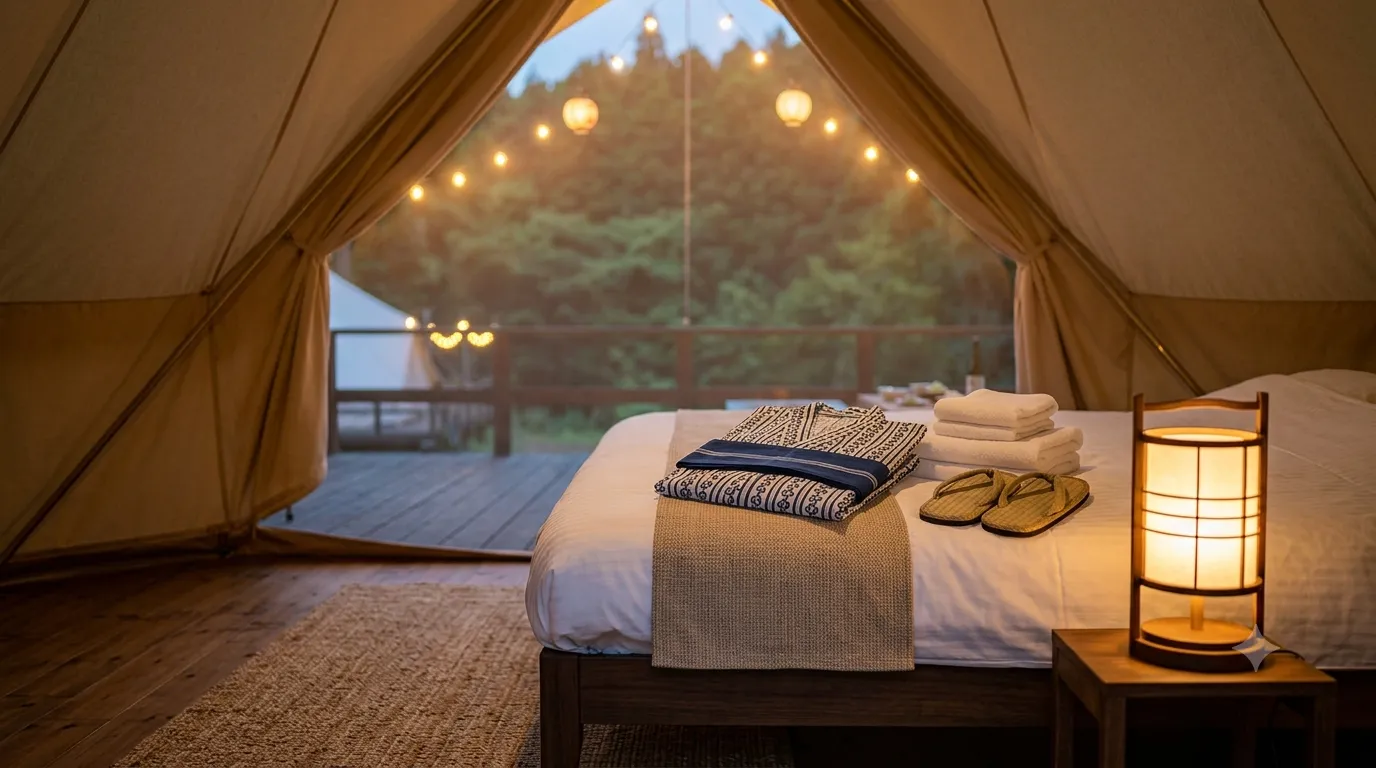
Some resorts also lend rain boots, blankets, and even outdoor jackets in winter. If you're unsure, ask when you book — it's a normal question and staff answer it constantly.
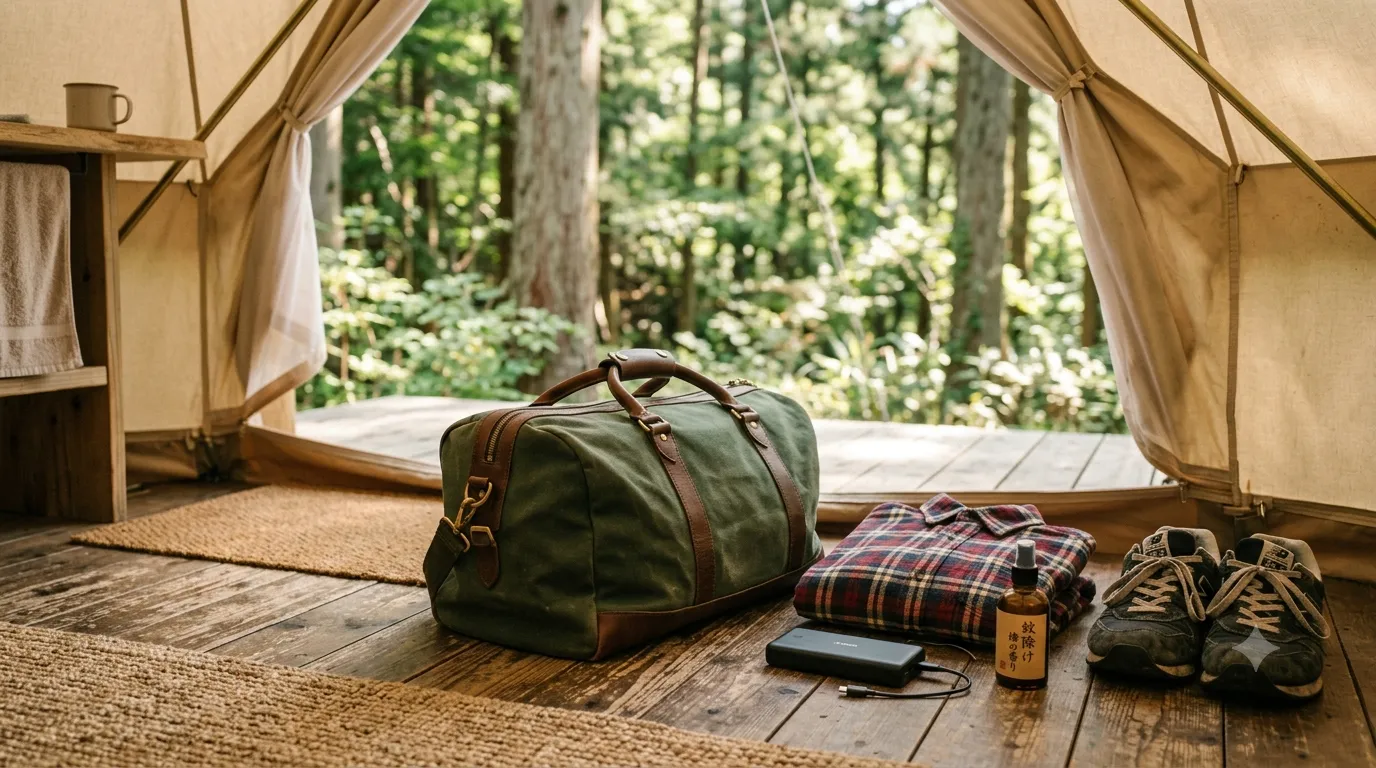
This is the number one thing guests wish they'd brought. Japanese summers in forested or lakeside areas mean mosquitoes at dusk, exactly when you're outside grilling.
Buy it in Japan — any drugstore has excellent options, and katori senko (mosquito coil) is the classic outdoor solution. Some resorts provide coils; almost none provide personal repellent spray.
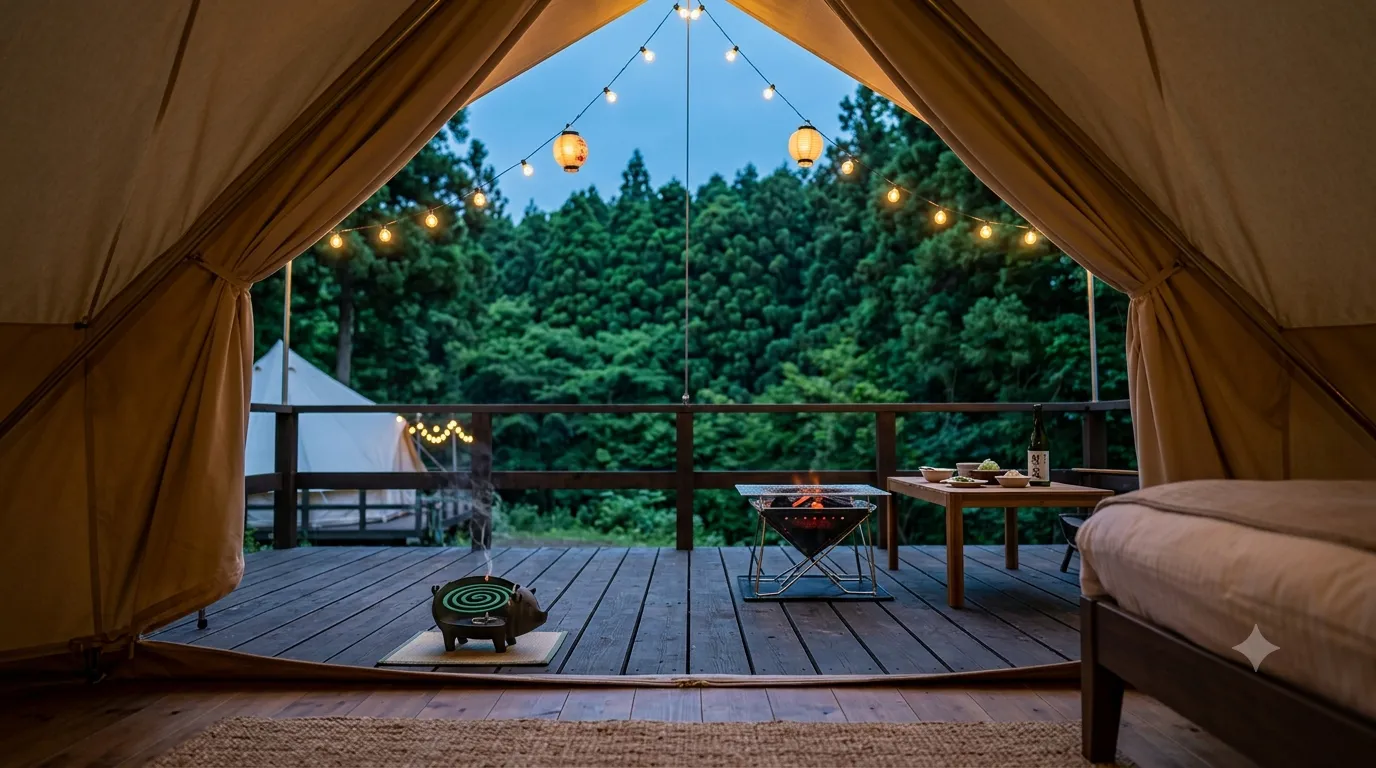
Mountain and highland areas near Mount Fuji sit at elevation, and evening temperatures drop far more sharply than in Tokyo. A summer day at 30°C can mean a 17°C night by the fire.
My rule: whatever you'd wear for a Tokyo evening, add one warm layer. In winter, add two and bring a hat.
Sites are gravel, grass, and dirt. Every season. Sneakers are fine; white sneakers you love are not.
Tents have outlets, but the fire pit, the lake, and the viewpoint don't. Between photos and navigation, phones drain fast.
Most resorts take cards, but rural taxis, small local shops, and vending machines on the way may not. ¥10,000–20,000 in cash removes all friction. Japanese convenience-store ATMs accept foreign cards.
Rural areas may not have a pharmacy nearby, and Japanese drugstores don't stock foreign prescriptions. Bring what you need for the trip.
Swimwear. Worth packing more than it used to be: saunas have become a standard feature at newer Japanese glamping sites, and many are private rather than gender-separated. Note that public onsen baths are still traditionally entered nude and gender-separated — swimwear is for saunas, private baths and pools.
A tote or small daypack. For carrying your things between the tent, the bathhouse, and the BBQ area. Somehow nobody packs one.
A book or cards. Nights are long, dark, and gloriously unstructured. There's no TV at many sites and that's the point.
Sunscreen. Japanese summer sun is stronger than most visitors expect, and lake reflection doubles it.
| Season | Add to your bag |
|---|---|
| Spring (Mar–May) | Light jacket, allergy medication if you're sensitive to cedar pollen |
| Summer (Jun–Aug) | Insect repellent, sunscreen, swimwear, quick-dry clothing |
| Autumn (Sep–Nov) | Warm mid-layer, light gloves for late autumn evenings |
| Winter (Dec–Feb) | Proper coat, hat, gloves, thermal base layer, warm socks |
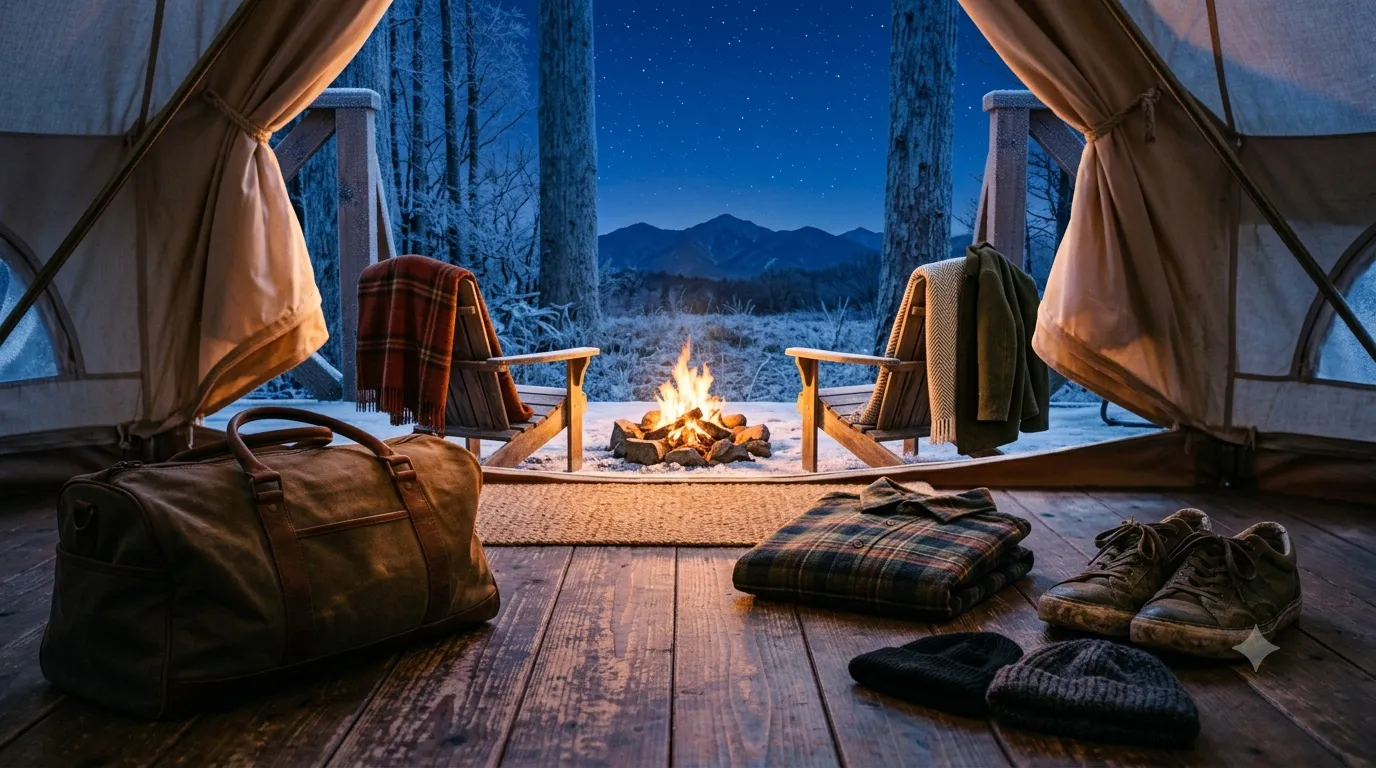
Winter deserves one extra note: the tents and cabins are heated and genuinely warm, but stargazing and the outdoor fire pit are the best parts of a winter stay. Dress for standing still outside at 0°C, not for the walk from the car. More in my winter glamping guide.
For a fuller breakdown of when to go, see my season-by-season guide.
If you're traveling car-free (see my guide to glamping without a car), here's the good news: everything above fits in a small overnight bag.
That's it. That's the whole trip. Send your big suitcase ahead to your next hotel with Japan's luggage delivery service and travel light.
Send one short email after booking and you'll never be caught out:
That third question is the good one. Staff know exactly what guests wish they'd had last week, and they'll tell you.
Far less than you'd think. Beds, bedding, towels, cooking equipment and food are provided at nearly every resort. What you actually need is layers, closed shoes, a power bank, and insect repellent in summer. Most people overpack by a wide margin.
Almost always, in the same way a hotel does — towels, basic toiletries, and often a yukata or loungewear. It's worth confirming for smaller or cheaper sites, but packing your own is usually wasted space.
No. Glamping means real beds with proper bedding, heating and cooling. If a listing expects you to bring a sleeping bag, that's camping rather than glamping, and the listing should say so.
Layers, and shoes you don't mind getting dirty. Evenings drop sharply once the sun goes down, even in summer, and you'll be outdoors for dinner. Nothing is formal — no resort expects you to dress up.
A warm layer more than you think you need, plus gloves and a hat for sitting outside at the fire. Domes and cabins are heated, so the inside is fine; it's the hours outdoors in the evening that catch people out. See my winter glamping guide.
Food, no — a BBQ set is included at most resorts, and many ask you not to bring outside food for fire and hygiene reasons. Drinks are usually fine to bring, and most sites sell them on-site too. Ask when you book if it matters to you.
Outside food at some resorts, and fireworks almost everywhere. Pets vary enormously — some sites are fully dog-friendly, others don't allow them at all, so check the listing rather than assuming either way.
A power bank. Tents and domes have electricity, but the socket is rarely near the bed, and you'll use more battery than usual taking photos. After that: insect repellent in summer, and something to carry wet shoes home in.
For accommodation, Booking.com lists Japanese glamping resorts in English, and the amenity list on each property page tells you most of what's provided before you even ask. Search "glamping Kawaguchiko," "glamping Chiba," or the resort name directly.
For activities to fill your days, GetYourGuide covers Fuji-area tours and outdoor experiences with English booking and free cancellation on most bookings.
Bring insect repellent, one more warm layer than you think, shoes you don't mind ruining, a power bank, and some cash. Leave the camping gear at home.
The resort has thought about the rest. That's what you're paying for — and honestly, it's the whole reason glamping in Japan feels so good.
Book your stay and your activities with English-language support, international payments, and flexible cancellation.