Glamping
This article contains affiliate links. If you book through them, I may earn a small commission at no extra cost to you. Learn more
Most people planning a glamping trip to Japan picture summer: lake swimming, fireflies, BBQ at dusk.
Here's what I'd tell you instead, and what most people who work in this industry actually believe: winter is the best season, and it isn't close.
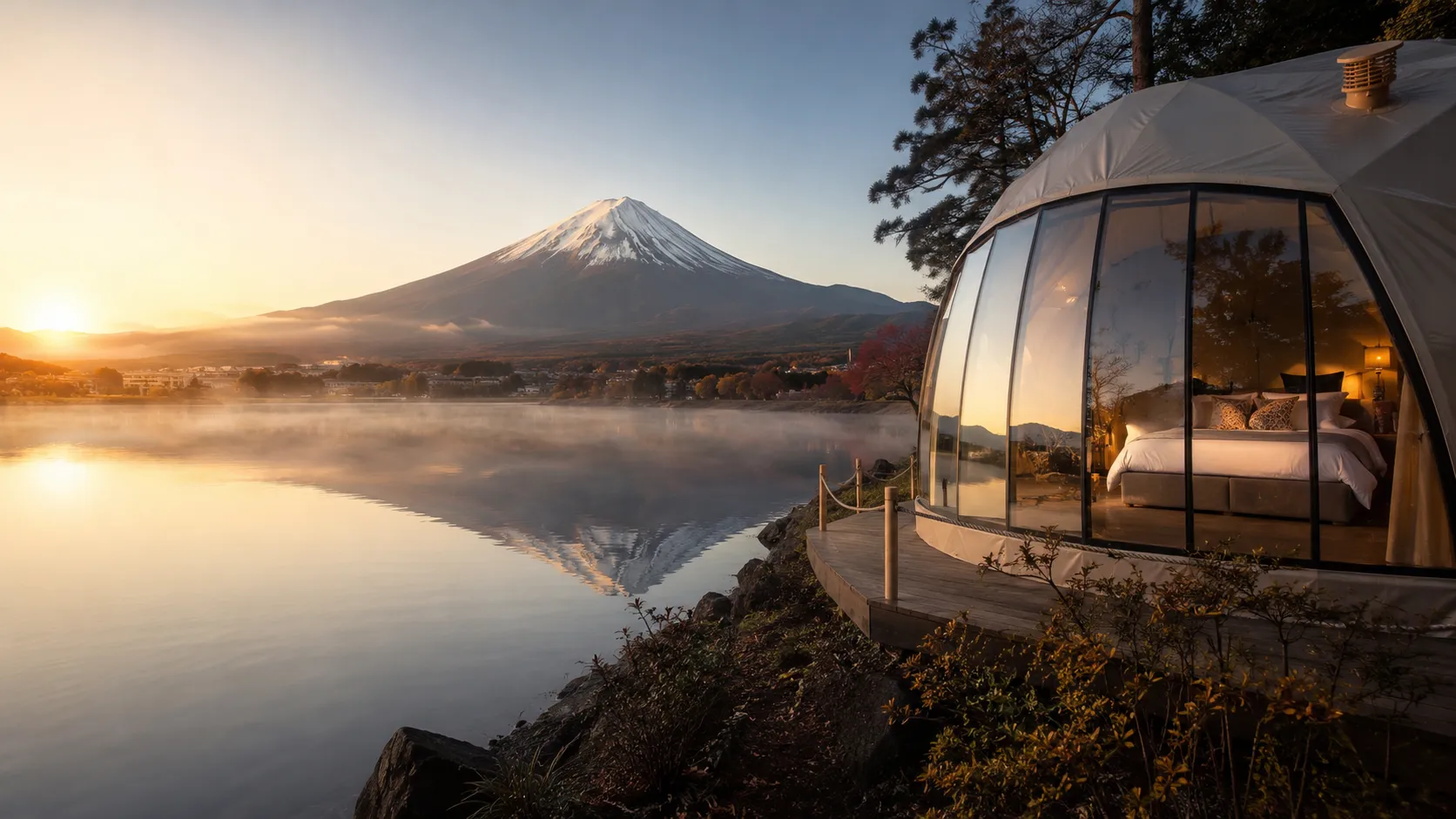
The resorts are quiet. The prices drop. And Mount Fuji — which spends much of the summer hidden behind cloud — is out almost every morning.
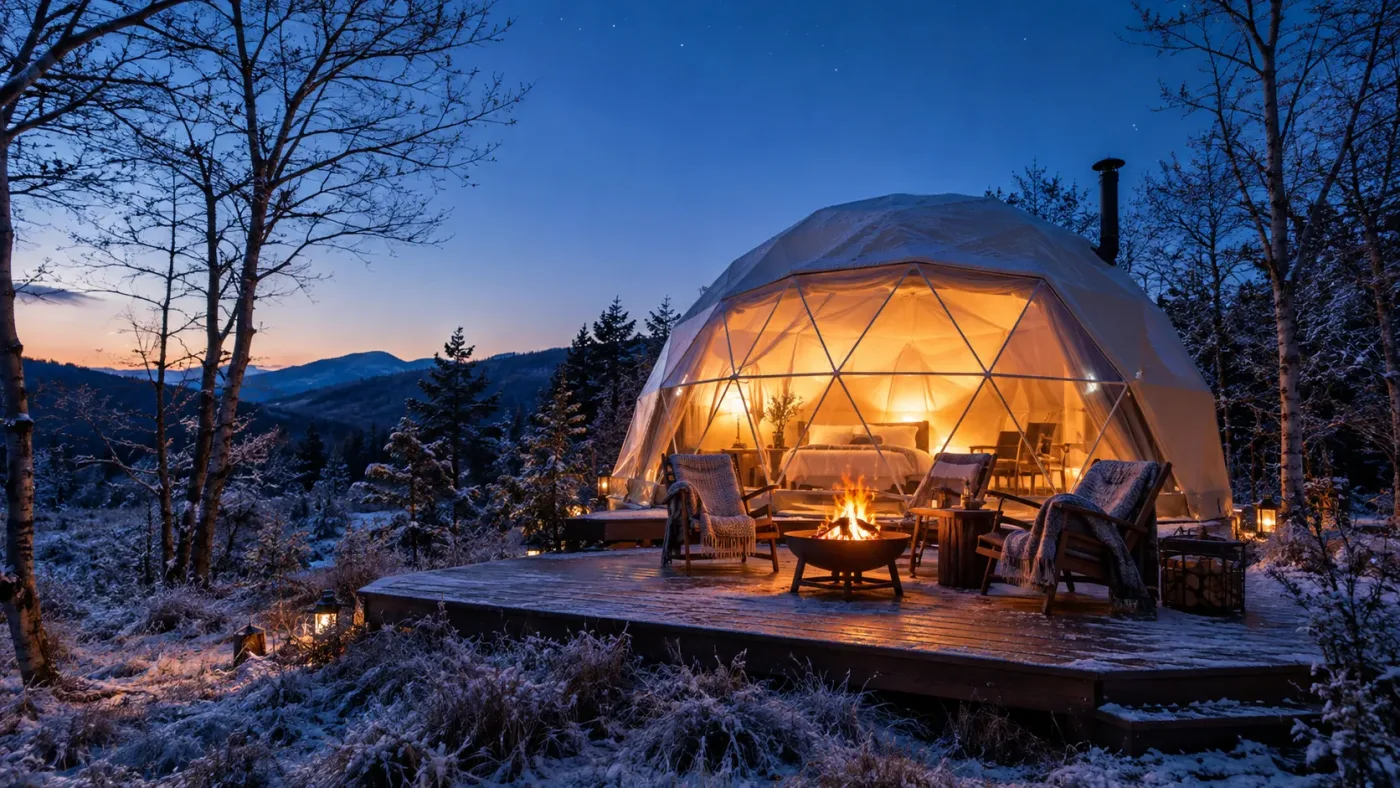
The reason people hesitate is simple. "Winter camping" sounds cold. But you're not camping. You're sleeping in a heated, insulated unit with a real bed, and in a growing number of places, a kotatsu and a wood stove.
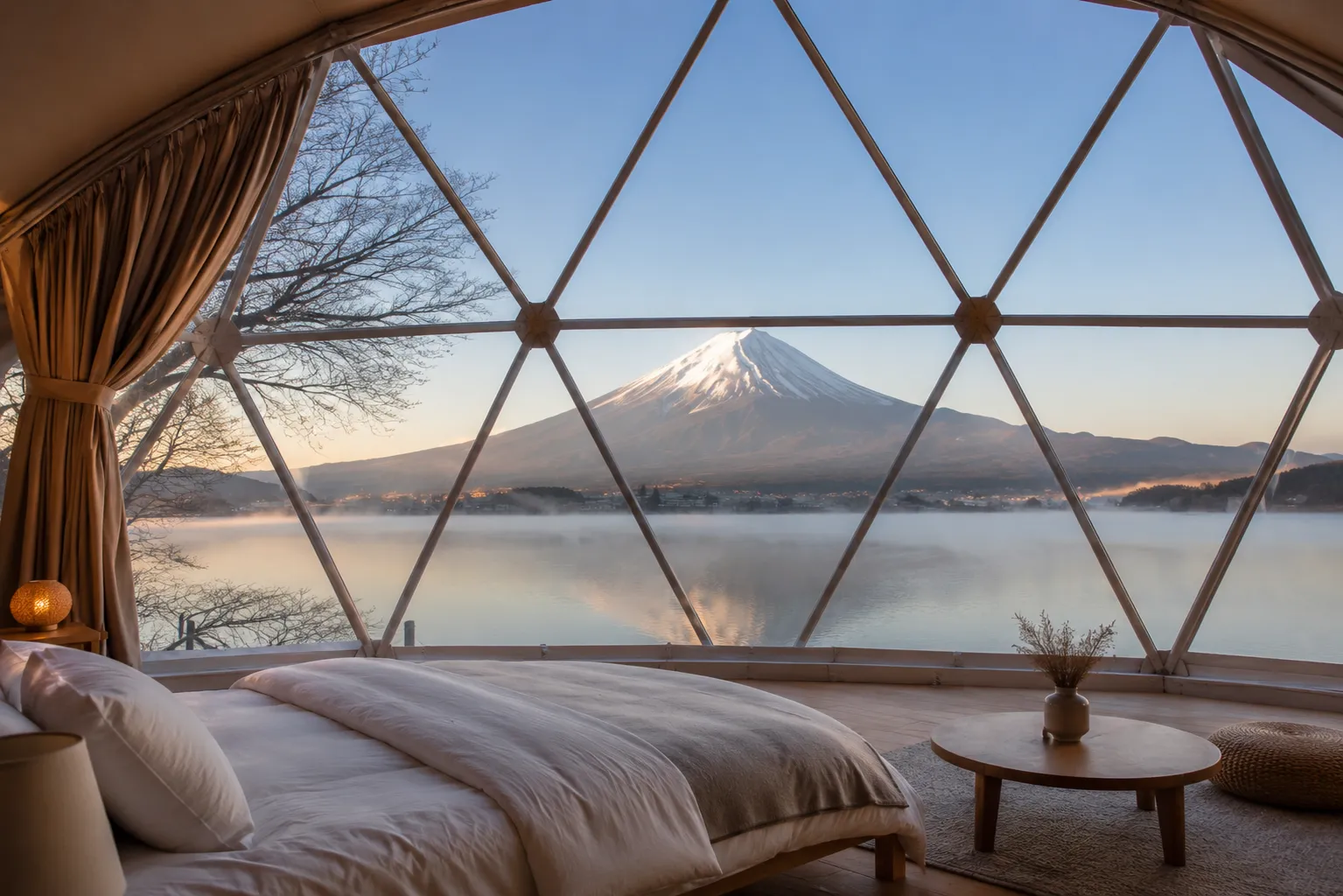
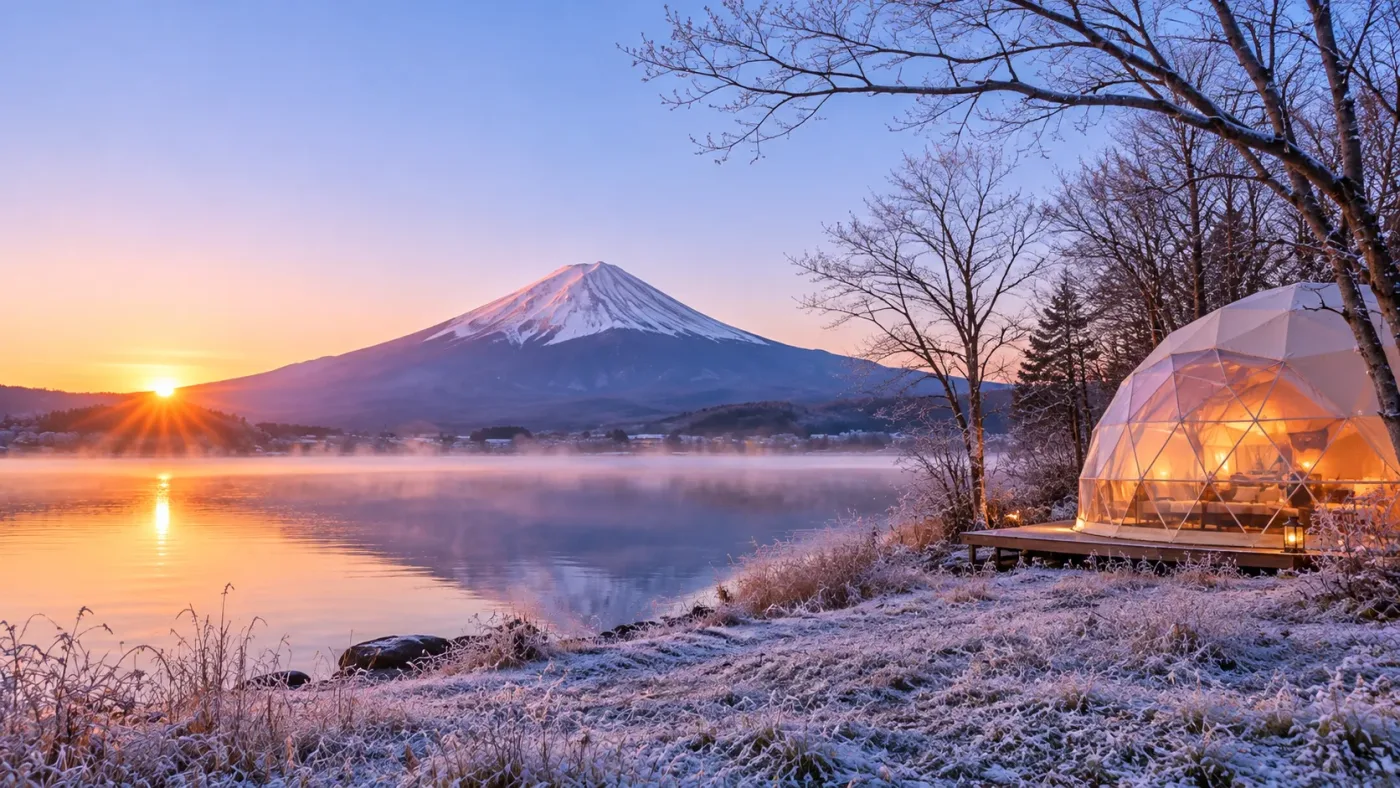
Mount Fuji is visible. This is the big one. Dry winter air means the snow-capped peak is out most mornings from December to February. In summer, cloud hides it most afternoons. If the mountain is why you're coming, the season matters more than the resort.
Prices are at their lowest. Winter is low season almost everywhere, and the discount is real — often 20–40% below summer peak. The same dome that's impossible to book in August is available on a January weekday.
It's empty. Resorts that are fully booked in summer run at a fraction of capacity. You get the fire pit, the view, and the quiet to yourself.
The night sky is at its best. Cold, dry air with no haze. Stargazing in winter is a different experience from stargazing in August, and most guests end up outside far longer than they planned.
Sauna finally makes sense. The heat-then-cold ritual is built on contrast, and stepping from 85°C into near-freezing air is the version it was designed for. Sauna glamping has become a standard feature at newer sites, and winter is when to use it.
Yes. This is the question that stops people booking, so here's the honest answer.
The units are heated properly. Dome tents and cabins at established resorts have air conditioning with heating, and many add a second source — a wood stove, a kerosene heater, or an electric panel. You sleep under a duvet in a warm room, not in a sleeping bag.
Many sites now have a kotatsu. This is the detail international guests love most and never expect. A kotatsu is a low table with a heater underneath and a heavy quilt draped over the edges — you sit on the floor with your legs under the blanket, and the warmth stays trapped. It's the centre of Japanese winter home life, and a handful of glamping sites have put one inside the dome. Sitting under a kotatsu, looking out a tent window at a snow-dusted forest, is a genuinely novel experience.
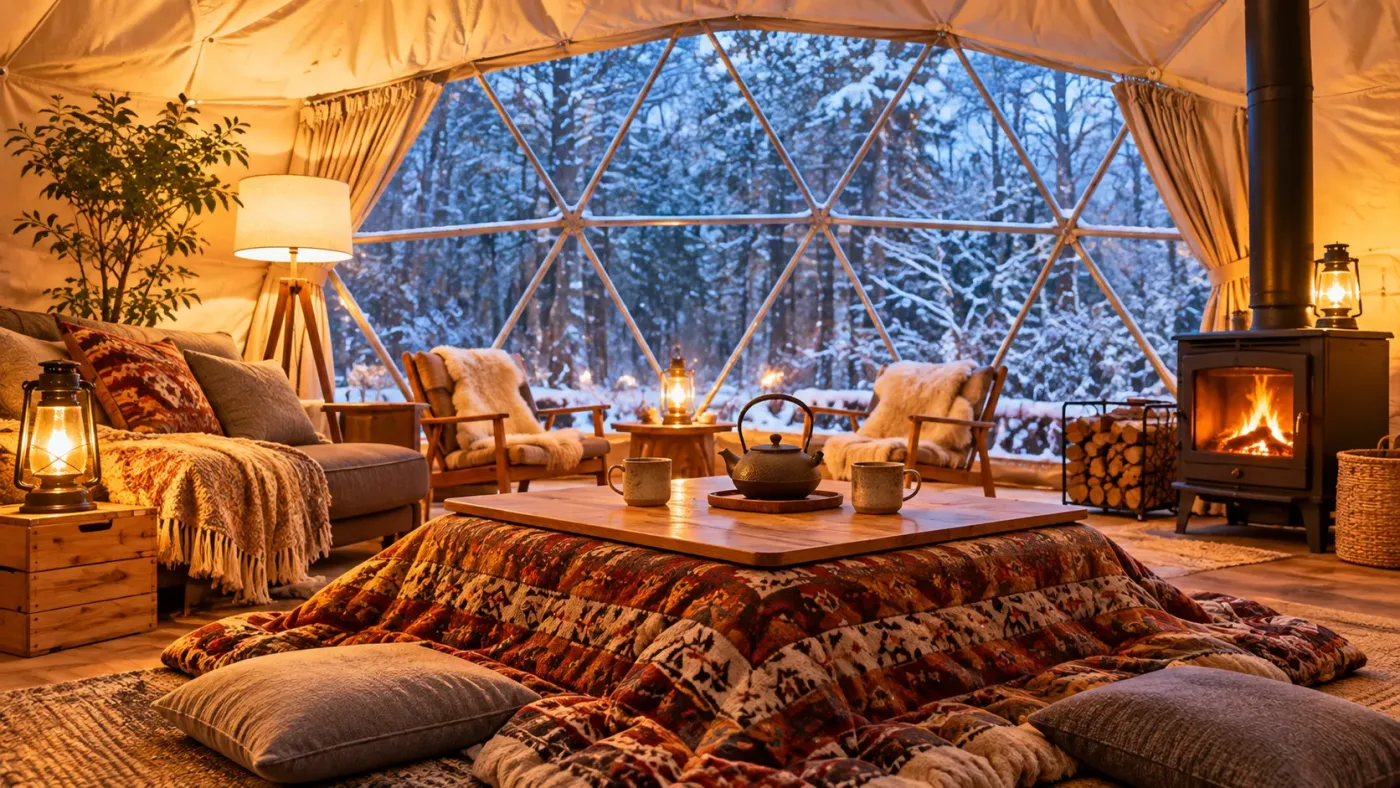
Where you will feel the cold is outside: the walk to the bathhouse, the fire pit, stargazing. That's manageable with the right clothing, and it's the part worth being outside for anyway.
One thing to verify before booking: not every resort stays open year-round, and heating setups differ. Ask what heating the unit has, and whether the bathroom is inside or a walk away. A short email at booking saves a cold surprise.
Around Lake Kawaguchiko, expect daytime highs of roughly 2–8°C and nights well below freezing. Highland areas near Mount Fuji are colder than Tokyo by a wide margin — that gap catches people out every year.
A realistic winter evening:
The mistake isn't underpacking clothes — it's dressing for the walk from the car rather than for standing still outside at 0°C.
Everything else is provided. Full list in my packing guide.
A quieter season doesn't mean nothing is happening. The Fuji Five Lakes area runs several winter events most years, and they pair well with a glamping stay:
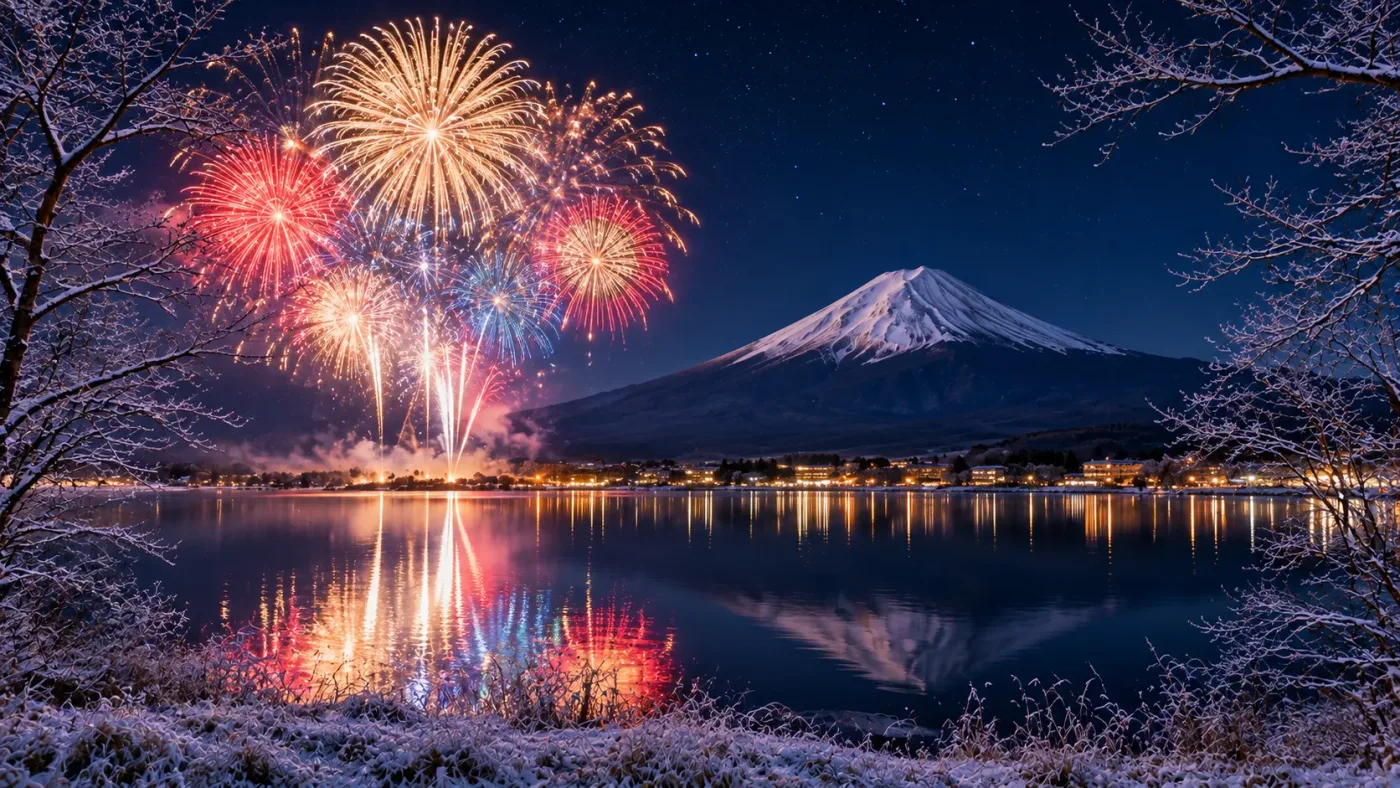
Dates shift year to year, so check the current schedule with Fujikyu or the Yamanashi tourism pages when you plan. But the point stands: there's more to do in winter here than most visitors assume.
| Area | Winter verdict |
|---|---|
| Lake Kawaguchiko | The best choice. Clearest Fuji views, winter events nearby, easiest access without a car |
| Chiba (Boso) | The mildest option near Tokyo. No Fuji view, but the gentlest winter conditions |
| Lake Yamanakako | Highest and coldest of the Fuji lakes. Spectacular, but dress seriously |
| Ibaraki | Quiet and cheap, though many rural sites need a car and some close for the season |
If it's your first winter glamping trip, go to Kawaguchiko. You get the Fuji mornings, the events, and you can reach it on a direct bus from Shinjuku — see my car-free guide for how that works.
Full comparisons of the resorts themselves are in my honest six-resort comparison.
Winter is also the cheapest time of year to go, which is the subject of my cheap glamping guide — low season plus a midweek date is the biggest saving available.
No. The units are heated and insulated, with real beds and duvets. You'll feel the cold outside at the fire pit or walking to the bathhouse, which is what warm clothing is for.
Sometimes, and it's beautiful when it happens, but the Fuji Five Lakes don't get heavy snow every week. Expect frost most mornings and occasional snowfall rather than a guaranteed white landscape.
Yes, meaningfully. Winter is low season, and weekdays are cheaper still. This is the single best time of year for value — see my cost guide for the numbers.
Nothing is guaranteed, but winter gives you by far the best odds. Book two nights so you get two mornings, and set an alarm for sunrise.
Most do, but not all, and some close for maintenance in January or February. Confirm before you book, especially at smaller sites.
The New Year period (roughly 29 December to 3 January) is a major holiday in Japan. Prices rise and availability tightens, so it behaves like peak season despite being mid-winter. Early December and late January are the value windows.
For accommodation, Booking.com lists Japanese glamping resorts in English with live winter pricing and flexible cancellation on most properties. Search "glamping Kawaguchiko," "glamping Yamanakako," or "glamping Chiba," and check each listing for heating and whether it's open on your dates.
For activities and day tours around your stay, GetYourGuide covers the Fuji area with English booking and free cancellation on most bookings.
Winter is the season this country's glamping scene is quietly best at, and the one visitors skip.
Book Kawaguchiko, midweek, for two nights. Bring a proper coat. Use the sauna, sit by the fire, and set an alarm for sunrise.
If the mountain is out that morning — and in winter it usually is — you'll understand why the people who work here keep recommending the cold months.
Book your stay and your activities with English-language support, international payments, and flexible cancellation.